
Double-stage Transformer Oil Purifiers China Manufacturer
ZANYO manufactures double-stage vacuum transformer oil purifiers for deep dehydration, degassing and particulate removal from transformer insulating oils. Designed for high-voltage transformer maintenance, installation, commissioning and vacuum oil filling, these systems help restore oil quality and dielectric performance. Multiple processing capacities and customizable configurations are available for substations, power plants, transformer manufacturers and on-site service teams.
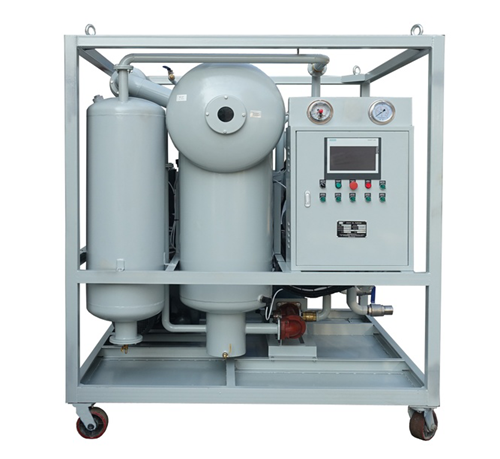
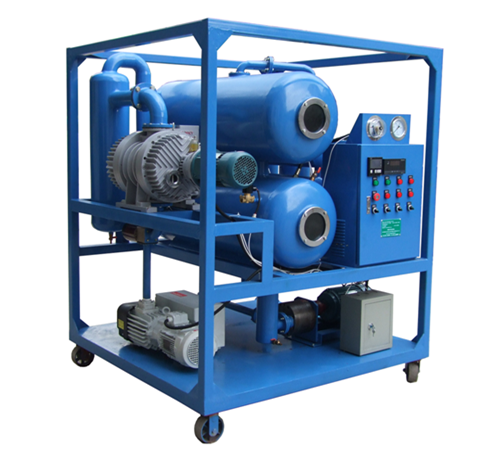
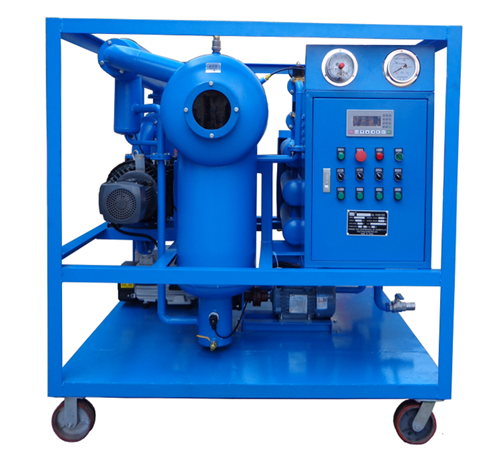
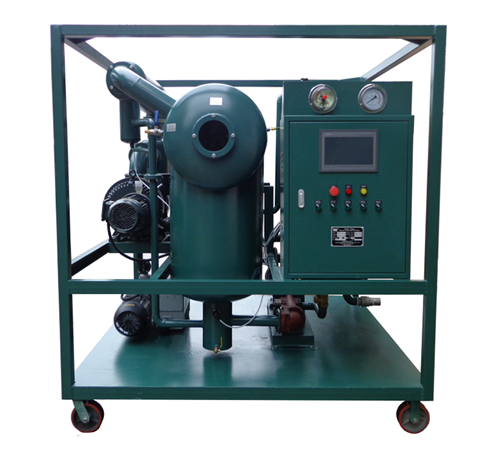
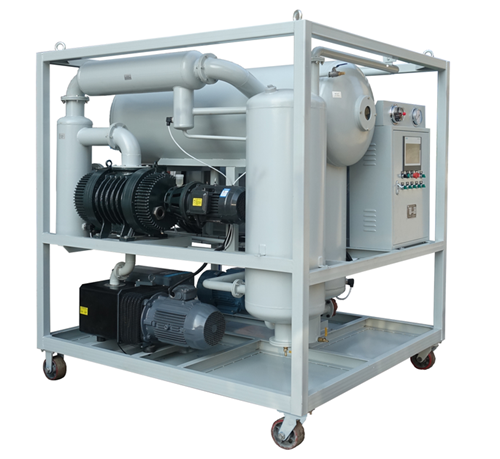
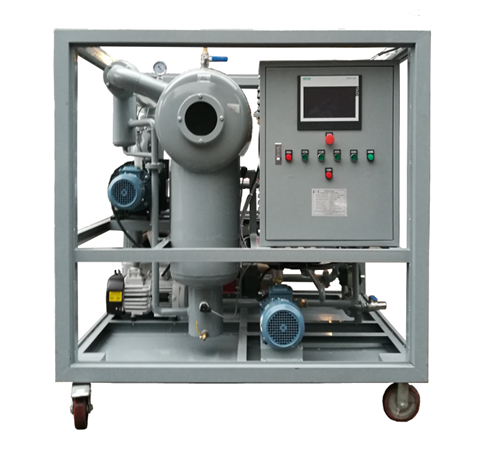
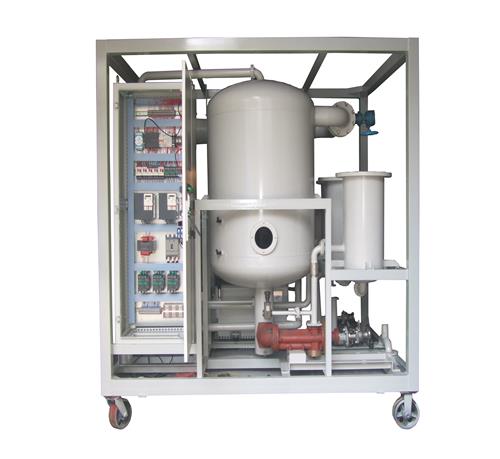
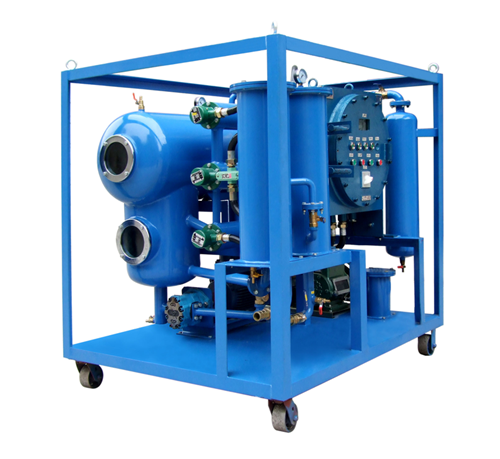
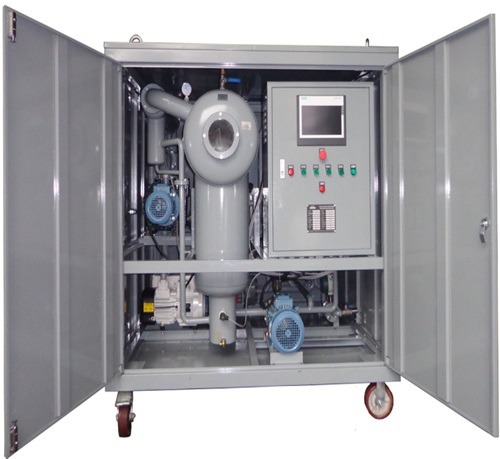
Double stage vacuum transformer oil purifier adopts a high vacuum system and high-precision filtration system, combined with a specially designed structure for vacuum pumping, vacuum drying, and vacuum oil filling. It has multiple functions including dehydration, degasification, filtration, vacuum pumping, vacuum drying, and vacuum oil filling.
The high vacuum system contains two stages: the pre-stage vacuum system (vacuum pump) and the second-stage vacuum system (roots vacuum pump). These double stages ensure the machine achieves a high vacuum degree. The precision system adopts a multi-grade oil filtration system, with fine filtration reaching 0.5 to 1 micrometer.
Double Stage Vacuum Transformer Oil Purifier is designed for purifying new or aged transformer oil, cable oil, super high-voltage transformer oil, switch oil, capacitor oil, and various insulating oils.
It works both online and offline, and is widely used for purifying insulation oil in all kinds of large power equipment, including transformers above 110KV up to 500KV.
The Purified Oil Can Be Achieve As Following:
| High Vacuum Degree | 0.05mbar |
| Fine Filter | 0.5 to 1 Micrometer |
| Moisture Content | Less Than 3 Ppm |
| Gas Content | Less Than 0.05% |
| The Dielectric Strength | Above Than 75kV |
After the transformers are running for a long time, because of factors such as pressure, air, temperature, and aging, etc, there are some gas, moisture and other impurities will be in the dielectric insulating oil. These factors affect the insulation function and heat dissipation properties of the transformer oil. Therefore, transformer oil filtering must be adopted.
Transformer oil filtering machine main purposes are removing dissolved gases and moisture, solid particulate, contamination, etc. After the transformer oil dehydrator, transformer oil degasification, transformer oil filtration processes, the dissolved gases and moisture, solid particulate, and contamination can be completely removed.
Other steps include vacuum pumping, vacuum drying, and vacuum oil filling.
Considering the injection of 100T oil into a single transformer, 8 to 9 oil tanks with capacity of 15-20t should be prepared.
The oil tanks arriving at the site are usually arranged near the transformer in two evenly arranged rows, The outlet of the oil tank is arranged in a straight line toward the inside. The outlet of each oil tank is equipped with a control valve to control the inflow and outflow of oil. The outlet of the control valve is connected with a T-shaped three-way interface, and the interfaces of all oil tanks are connected together through the tubing.
Leave an empty oil tank to be used for the conversion of transformer oil when filtering oil.
In this way, transformer oil can be filtered in any oil tank as needed. So as to avoid the tedious task of frequently dismantling pipes
ZYD Series Transformer Double Stage Vacuum Transformer Oil Purifier System is designed for purifying used or aged transformer oil, super high -voltage transformer oil, switchgear oil and different insulating oils. It is also used for purifying insulation oil in all kinds of large power equipments, which are above 110KV, and 500 meters altitude.
This transformer oil purification system can remove free water, soluble water, acid , gas, small and big size particles, increasing the pressure force and quality of oil, improving the breakdown voltage value, making the transformers and electric device running safely.
Deeper Oil Treatment:
Higher vacuum capacity supports effective removal of moisture and dissolved gases from heavily contaminated transformer oils.
Why Choose ZANYO
ZANYO specializes in manufacturing oil filtration, purification and recycling equipment. Our technical team recommends suitable double-stage systems according to each customer’s oil volume, contamination level, required treatment results, processing time and operating environment. Processing capacity, power supply, filtration stages, control systems, enclosures and mobility options can be customized for specific projects. Each system is inspected before delivery, with technical support available for equipment selection, installation, operation, maintenance and troubleshooting.
More Information
What Does Double-Stage Vacuum Mean?
Single-stage vacuum oil purifiers rely on rotary vane vacuum pumps. Double-stage systems add Roots booster pumps to provide a second pumping stage.
The Roots booster pumps work together with the rotary vane pumps to create lower absolute pressure and increase pumping capacity inside the degassing chambers. Under these deeper vacuum conditions, heated transformer oils release moisture and dissolved gases more efficiently.
As a result, double-stage vacuum transformer oil purifiers are better suited to deep dehydration, intensive degassing, vacuum oil filling and other demanding transformer maintenance tasks. Actual treatment results still depend on inlet oil conditions, oil temperature, processing flow, vacuum stability and circulation time.
How Does the Oil Purification Process Work?
-
Intake and coarse filtration: Larger particles are intercepted to protect downstream components.
-
Controlled heating: Heating lowers viscosity and supports moisture release. Heaters should be interlocked with oil flow and liquid level.
-
Vacuum dehydration and degassing: Dispersed oil enters the vacuum section, where reduced pressure removes water and gases.
-
Vapor handling: Extracted vapor is condensed or discharged while controls limit foaming and oil loss.
-
Fine filtration: Downstream filters capture solids to the specified rating.
-
Discharge or recirculation: Oil returns to a tank or transformer until test criteria are met.
What Can Double-Stage Oil Purifiers Remove?
These machines address common forms of insulating-oil contamination, with important limitations.
| Oil condition | Treatment mechanism | Important limitation |
|---|---|---|
| Free water | Separation, heating, and vacuum treatment | Heavy water ingress may require slower processing or repeated circulation |
| Dissolved moisture | Heating and high-vacuum exposure | Results depend on inlet condition, temperature, pressure, and residence time |
| Free and dissolved gases | Vacuum degassing | Critical projects may require laboratory gas analysis |
| Solid particles | Coarse and fine filtration | Filtration rating must be specified separately from vacuum level |
| Acidity, sludge, and oxidation products | Usually requires adsorbents or reclamation equipment | Standard purification does not fully restore chemically aged oils |
Purification does not automatically correct high acidity, severe oxidation, or degraded color; these conditions may require reclamation with suitable adsorbents. It also cannot repair damaged cellulose insulation.
Double-Stage vs Single-Stage: When Is the Upgrade Necessary?
Single-stage vacuum oil purifiers suit routine transformer oil filtration and moderate moisture removal. Double-stage vacuum transformer oil purifiers provide deeper vacuum and higher pumping capacity for oils containing more moisture or dissolved gases.
| Selection Factor | Single-Stage Vacuum Oil Purifiers | Double-Stage Vacuum Oil Purifiers |
|---|---|---|
| Vacuum System | Rotary vane vacuum pump | Rotary vane pump with Roots booster pump |
| Oil Condition | Light to moderate contamination | Higher moisture and dissolved-gas content |
| Typical Duties | Routine filtration and maintenance | Deep dehydration, intensive degassing and commissioning |
| Additional Functions | Transformer oil purification | Transformer evacuation and vacuum oil filling options |
| Investment | Lower initial and maintenance costs | Greater capacity for demanding treatment requirements |
Choose double-stage systems according to the inlet oil condition, required outlet quality, total oil volume and available processing time. Oil testing before equipment selection helps define measurable treatment targets and suitable system capacity.
Learn More About Single Stage Vacuum vs Double Stage Vacuum Here
How Should Treatment Results Be Verified?
Verification requires representative inlet and outlet samples collected and tested using consistent procedures.
Moisture, dielectric breakdown voltage, and particle cleanliness measure different aspects of oil condition. Breakdown voltage alone does not prove that oil is dry and chemically healthy. Dissolved-gas analysis or other tests may be required for commissioning or fault investigation.
Fixed outlet claims should be treated cautiously unless suppliers state the oil type, inlet condition, temperature, flow, number of passes, sampling procedure, and test method. Acceptance limits should follow the applicable insulating-oil specification, transformer requirements, and project procedure.
Is a double-stage purifier always better than a single-stage system?
No. Greater vacuum capacity only creates value when the treatment duty requires it. For routine maintenance, single-stage systems may achieve the specified oil quality with lower purchase, energy and maintenance costs. Double-stage systems become worthwhile when demanding outlet targets or additional vacuum operations justify the extra capacity.