
Oil Testing Machine China Manufacturer & Supplier
ZANYO is your reliable manufacturer and supplier of oil testing machines. We offer high-quality lab equipments designed to deliver accurate results for oil analysis. Our machines are ideal for testing engine oil, lubricating oil, and transformer oil, helping industries maintain optimal performance and ensure consistent quality control.
ZANYO Oil Testing Equipment Series
Oil testing machines are designed to evaluate the physical, chemical, and electrical properties of industrial oils. Different testing methods help manufacturers, power utilities, laboratories, and maintenance teams assess oil quality, identify contamination, and monitor performance.
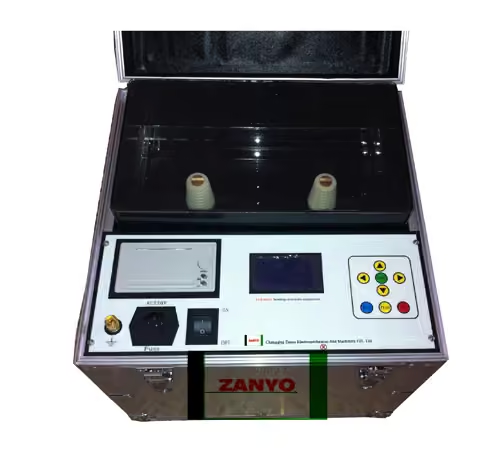
ZYIIJ-II Automatic BDV Oil Tester
Performance and Usages ZYIIJ-II Automatic BDV oil tester is the insulation oil tester. it is is special for [...]
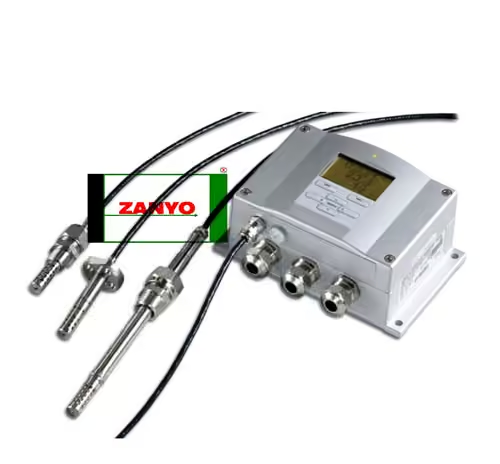
ZYMMT-Oil-Moisture-Sensor-Online
Performance and Usages ZYMMT Moisture Sensor is specially designed for the measurement of water content in oil. it [...]
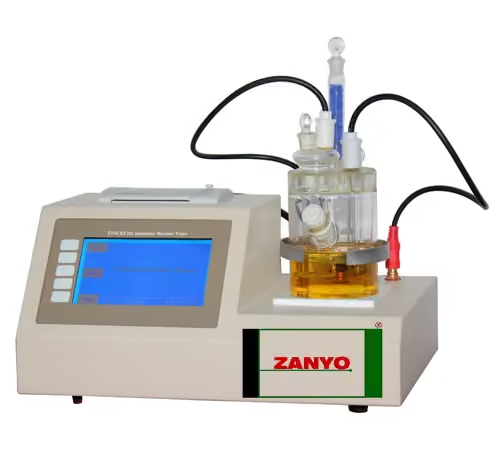
ZYSCKF105 Coulometric Karl Fischer titrators
Performance and Usages The ZYSCKF105 Coulometric Karl Fischer Titrators is an used for Coulometric water determination according to [...]
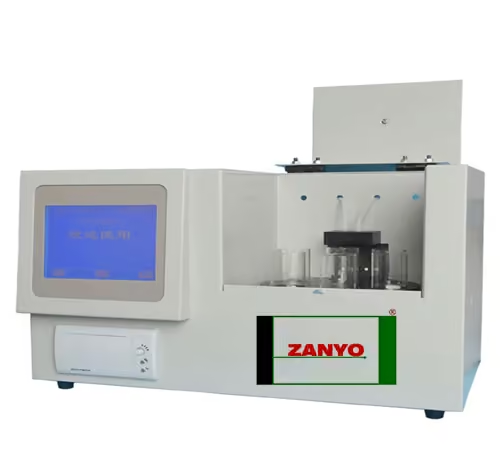
ZYSCSZ706 Acid Value Automatic Analyzer
Performance and Usages ZYSCSZ706 Acid Value Automatic Analyzer. In power system and industrial and mining enterprises have a [...]
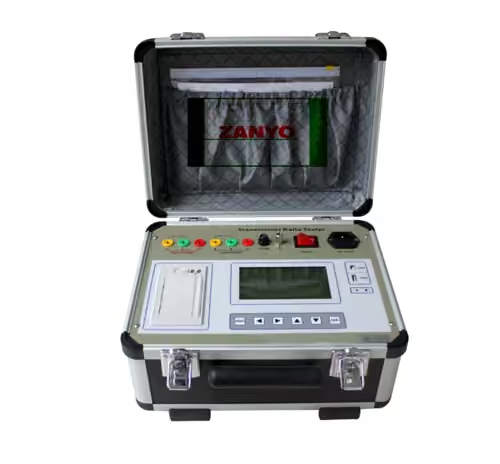
ZYBC-IV Transformer Ratio Tester
Performance and Usages ZYBC-IV Transformer Ratio Tester is specially designed for three-phase transformer in power system, especially for [...]
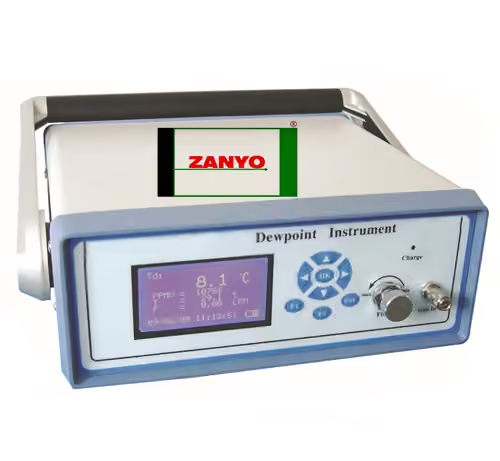
ZYDMT Automatic Gas Dewpoint Meter
Performance and Usages ZYDMT is Automatic Gas Dewpoint Meter, it adopts the Vaisala company DRYCAP ® humidity sensor, [...]
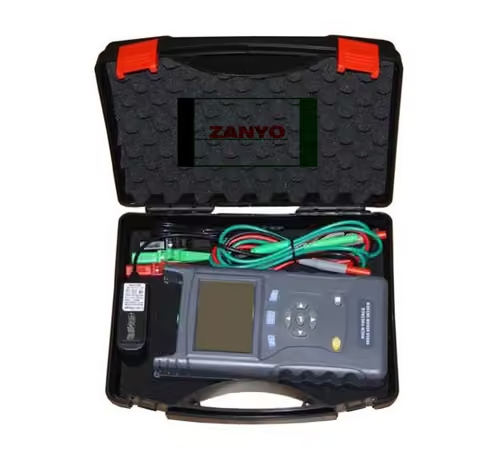
ZYHW Insulation Resistance Tester
Performance and Usages ZYHW Insulation Resistance Tester takes computer technology as kernel, LSI combined with digital circuit, equipped [...]
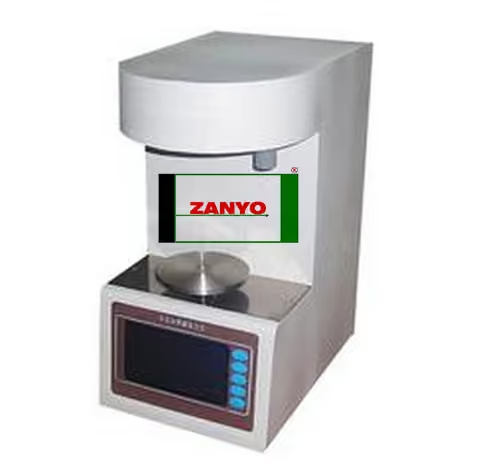
ZYZL Transformer Oil Interfacial Tension Test
Performance and Usages ZYZL Transformer Oil Interfacial Tension Test Equipment Tests various liquid interface tension (interface between liquid and air) and also that between mineral oil and water(interface between liquid and liquid) by means of automatic control of internal microcomputer under circumstances of nonequilibrium. Adopting "platinum ring method". Fully automatic; Finish the whole testing process [...]
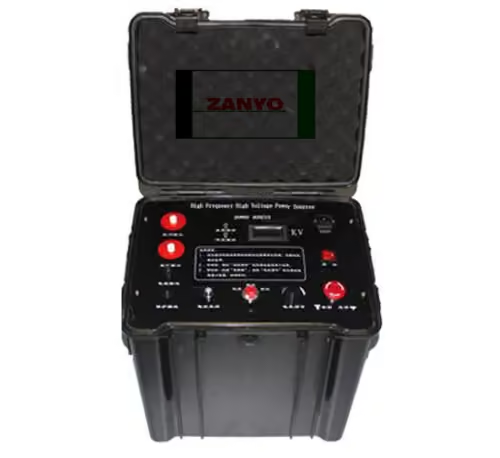
ZYFL-A10 CABLE FAULT LOCATOR
Performance and Usages ZYFL-A10 CABLE FAULT LOCATOR integrated industrial embedded computer platform, Network Communications Service and USB communication [...]
Typles of Oil Testing Machines
1. Automatic BDV Oil Tester
An Automatic BDV Oil Tester measures the breakdown voltage of insulating oil to evaluate its dielectric strength. It applies an increasing voltage to an oil sample until electrical breakdown occurs. The test results help determine whether transformer oil can maintain adequate electrical insulation. It is widely used in power utilities, transformer manufacturing facilities, and electrical testing laboratories.
2. Online Oil Moisture Sensor
An Online Oil Moisture Sensor continuously monitors water content in insulating oil and other industrial oils. It provides real-time moisture measurements, helping operators identify water contamination and monitor changes in oil conditions. It is suitable for transformer monitoring systems, industrial lubrication systems, and equipment requiring continuous oil condition monitoring.
3. Coulometric Karl Fischer Titrator
A Coulometric Karl Fischer Titrator determines trace moisture content through the Karl Fischer titration method. It is suitable for measuring small amounts of water in transformer oil, lubricating oil, petroleum products, and other liquid samples. This instrument is commonly used in oil testing laboratories and quality control facilities where accurate moisture analysis is required.
4. Automatic Acid Value Analyzer
An Automatic Acid Value Analyzer measures the acid value of transformer oil and other petroleum products. The acid value indicates the concentration of acidic substances in an oil sample and helps evaluate oxidation, aging, and deterioration. It is commonly used by transformer manufacturers, power companies, petroleum laboratories, and industrial oil testing facilities.
5. Transformer Oil Interfacial Tension Tester
A Transformer Oil Interfacial Tension Tester measures the interfacial tension between transformer oil and water. This parameter helps assess the presence of polar contaminants and oxidation products in insulating oil. Changes in interfacial tension can indicate oil aging and deterioration, making this instrument useful for transformer oil condition assessment and laboratory quality control.
Why Choose ZANYO For Oil Analyzers
Comprehensive Testing Equipment
ZANYO offers oil testing machines for measuring moisture content, acid value, breakdown voltage, interfacial tension, and other key oil properties across different industrial applications.
Accurate Measurement Performance
Designed for consistent testing and reliable measurements, our instruments help laboratories and industrial users evaluate oil quality and monitor equipment conditions.
Multiple Oil Testing Applications
Our equipment supports testing of transformer oils, insulating oils, lubricants, hydraulic oils, and other petroleum products to meet different testing requirements.
Practical Operation and Maintenance
User-friendly controls, automated testing functions, and practical instrument designs help simplify daily testing procedures and improve laboratory efficiency.
Technical Support and Customization
ZANYO provides technical assistance and equipment recommendations based on testing standards, sample types, and specific application requirements.
Main Methods of Industrial Oil Testing
1. Dielectric Strength Testing
Dielectric strength testing measures the maximum electrical voltage that insulating oil can withstand before electrical breakdown occurs.
A typical oil BDV tester places an oil sample between two electrodes with a specified gap. The voltage gradually increases until electrical breakdown occurs. The measured breakdown voltage is recorded.
This test is particularly important for transformer oil and other electrical insulating oils.
2. Moisture Content Testing
Moisture testing determines the amount of water present in an oil sample. Water may enter oil through leaks, condensation, poor storage, or exposure to humid environments.
Excessive moisture can reduce insulating performance in transformer oil, promote corrosion, and affect lubrication in hydraulic and mechanical systems.
Karl Fischer titration is a widely used method for determining water content in oil samples.
3. Viscosity Testing
Viscosity testing measures the resistance of oil to flow at a specified temperature. It is one of the most important tests for hydraulic oils, lubricating oils, gear oils, and turbine oils.
Oil that is too viscous may increase flow resistance and energy consumption. Oil with insufficient viscosity may fail to maintain an adequate lubricating film.
Kinematic viscosity is commonly measured using capillary viscometers under controlled temperature conditions.
4. Acid Number Testing
Acid number testing measures the amount of potassium hydroxide (KOH), expressed in milligrams, required to neutralize acidic constituents in one gram of oil.
The result is expressed in mg KOH/g. Increasing acid number can indicate oxidation, additive degradation, or contamination, depending on the oil formulation and application.
This test is commonly used for transformer oil, turbine oil, hydraulic oil, and lubricating oil.
5. Flash Point Testing
Flash point testing determines the lowest temperature at which an oil sample produces enough vapor to ignite momentarily when exposed to an ignition source under specified test conditions.
A significant change in flash point may indicate contamination with lighter products or changes in oil composition.
The test is commonly applied to lubricating oils, transformer oils, hydraulic oils, and petroleum products.
6. Interfacial Tension Testing
Interfacial tension testing measures the force required to increase the interface between oil and water. It is particularly useful for evaluating transformer insulating oil.
Oxidation products and polar contaminants can reduce the interfacial tension of oil. A declining result may indicate deterioration, although it should be interpreted alongside other test results.
7. Dielectric Dissipation Factor Testing
The dielectric dissipation factor, commonly called tan delta, measures the energy lost as heat when insulating oil is subjected to an alternating electric field.
A higher tan delta may indicate contamination, moisture, or deterioration of insulating oil. This measurement is useful for assessing the electrical condition of transformer oil.
8. Particle Contamination Testing
Particle contamination testing identifies and measures solid particles suspended in oil. These particles may come from component wear, external dust, manufacturing residues, or degraded materials.
In hydraulic systems, excessive particle contamination can cause valve sticking, pump wear, and reduced system efficiency.
Results are often evaluated using ISO 4406 cleanliness codes.
Comparison of Industrial Oil and Testing Requirements
| Oil type | Primary function | Important testing parameters |
|---|---|---|
| Transformer oil | Electrical insulation and cooling | BDV, moisture, acidity, tan delta, IFT |
| Hydraulic oil | Hydraulic power transmission | Viscosity, moisture, particle contamination, acidity |
| Lubricating oil | Friction and wear reduction | Viscosity, acidity, oxidation, wear metals |
| Turbine oil | Bearing lubrication and cooling | Oxidation, viscosity, water separation, foaming |
| Gear oil | Gear lubrication and load protection | Viscosity, extreme-pressure performance, oxidation |
| Compressor oil | Compressor lubrication and cooling | Viscosity, oxidation, acidity, moisture |
| Heat transfer oil | Thermal energy transfer | Thermal stability, viscosity, acidity, flash point |
How to Choose the Right Oil Testing Machines
1. Identify the Oil Type
Determine whether you need to test transformer oil, hydraulic oil, lubricating oil, turbine oil, or other petroleum products. Each oil type has different performance requirements.
2. Define the Required Testing Parameters
Identify the properties that need to be measured. For example, transformer oil testing commonly focuses on breakdown voltage, moisture content, acidity, and dielectric dissipation factor. Hydraulic oil testing places greater emphasis on viscosity, water content, and particle contamination.
3. Check Applicable Testing Standards
Verify that the instrument supports the required ASTM, IEC, or ISO test methods. Standard compliance is important for laboratory quality control and consistent reporting.
4. Evaluate Measurement Performance
Consider measurement range, accuracy, repeatability, temperature control, and test automation. These specifications should match the laboratory’s testing requirements.
5. Consider Testing Capacity and Operation
For laboratories handling large sample volumes, automatic testing functions and higher sample throughput can improve efficiency. Smaller laboratories may prioritize compact equipment and straightforward operation.