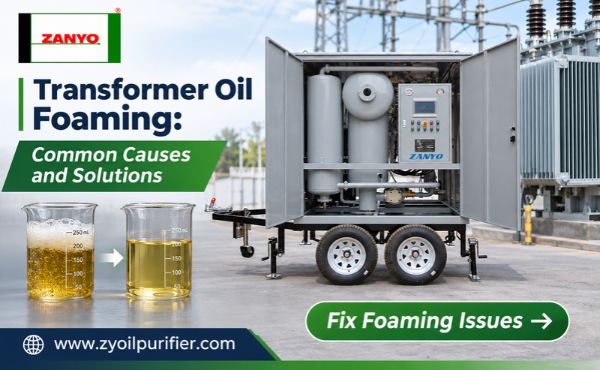
Transformer oil foaming can occur during vacuum filtration, degassing, oil filling, or transformer operation. Common causes include excessive dissolved gases, moisture vaporization under vacuum, air entering through leaking connections, chemical contamination, and incompatible insulating liquids. While some foam formation is temporary during normal oil treatment, persistent or excessive foaming may indicate contamination or equipment problems.
Identifying the actual cause is essential before adjusting operating conditions or applying corrective treatment. Uncontrolled foaming can interfere with vacuum processing, cause oil carryover, contaminate vacuum pump components, and reduce treatment efficiency.
What Is Transformer Oil Foaming?
Transformer oil foaming refers to the formation and accumulation of gas or vapor bubbles at the oil surface or within the insulating liquid.
During normal operation, transformer oil may contain dissolved air and other gases. When pressure or temperature changes, some of these gases can separate from the liquid and form bubbles.
Under vacuum conditions, the release of dissolved gases and water vapor can become more noticeable. If bubbles accumulate faster than they collapse or escape, visible foam develops.
It is important to distinguish between three related phenomena:
- Foaming: Bubbles accumulate at the oil surface and form a relatively persistent layer.
- Air entrainment: Small air bubbles become dispersed throughout the oil.
- Gas bubbling: Dissolved gases separate from the oil and form individual bubbles.
These phenomena may occur together, but they do not necessarily have the same causes or require the same corrective measures.
What Causes Transformer Oil to Foam?
1. Air Entering the Oil System
Air leakage is a common cause of excessive foaming during transformer oil filtration and degassing.
If an inlet hose, pipeline connection, valve, or pump seal is not properly sealed, outside air can enter the oil circulation system. The incoming air becomes dispersed in the oil and may expand when the liquid enters a vacuum chamber.
Common sources include:
- Loose inlet hose connections.
- Damaged pipeline seals.
- Worn pump shaft seals.
- Improperly installed fittings.
- Inlet hoses that are not adequately submerged in the oil supply.
Air leakage can cause unstable vacuum conditions and continuous bubble formation.
Solution: Inspect the complete inlet pipeline, pump connections, valves, and seals. Tighten loose fittings and replace damaged components before restarting the treatment process.
2. Dissolved Gases and Moisture Released Under Vacuum
Transformer oil can contain dissolved gases and water even when it appears clear.
When oil enters a vacuum chamber, the reduced pressure encourages dissolved gases to separate from the liquid. Moisture also evaporates more readily under reduced pressure, particularly when the oil is heated within the equipment’s specified operating range.
These gases and water vapor form bubbles that rise through the oil.
This is a normal part of the vacuum dehydration and degassing process. However, when the incoming oil contains excessive moisture or dissolved gas, the volume of released vapor can increase significantly.
If the gas and vapor generation rate exceeds the chamber’s separation capacity, foam may accumulate rapidly.
Solution: Check the incoming oil’s moisture and gas content. Adjust the processing conditions according to the equipment manufacturer’s operating instructions. Ensure that the vacuum system and vapor extraction capacity are suitable for the treatment load.
3. Silicone and Other Chemical Contamination
Chemical contamination is an important cause of abnormal foaming in transformer insulating oil.
Small amounts of silicone oil, phthalates, and certain surface-active substances can change the interfacial properties of mineral insulating oil.
As a result, bubbles may become more stable and resist collapsing during vacuum degassing.
IEC 60296 specifically identifies silicone, phthalates, and other surface-active contaminants as substances that can cause foaming during transformer oil degassing.
Contamination may occur through:
- Shared oil storage or transfer equipment.
- Previously used hoses and pumps.
- Mixing with incompatible industrial liquids.
- Improper cleaning of processing equipment.
- Accidental introduction of silicone-based materials.
Solution: Identify the contaminant through appropriate laboratory testing. Keep dedicated storage and transfer equipment for different insulating liquids. Do not assume that ordinary filtration can remove dissolved chemical contaminants.
4. Mixing Different Insulating Liquids
Different transformer insulating liquids have different chemical compositions and physical properties.
Mineral oil, natural ester, synthetic ester, and silicone-based insulating liquids should not be mixed without confirming their compatibility and obtaining approval from the transformer and liquid manufacturers.
In particular, trace silicone contamination in mineral insulating oil can cause excessive foaming during vacuum dehydration and equipment filling.
Mixing incompatible liquids may also affect dielectric performance, fluid stability, and other important properties.
Solution: Verify the original insulating liquid type before adding or processing oil. Use dedicated handling equipment whenever possible. If incompatible liquids have been mixed, obtain a representative sample and arrange laboratory compatibility testing before further treatment.
5. Oil Deterioration and Oxidation
Transformer oil gradually deteriorates through prolonged exposure to oxygen, elevated temperatures, and operating stresses.
Oxidation produces acids and other degradation products that change the chemical condition of the oil. Advanced deterioration can also affect its physical properties and behavior during processing.
Although oxidation should not automatically be treated as the cause of foaming, severely deteriorated or contaminated oil may exhibit abnormal processing behavior.
Other indicators of oil deterioration include:
- Increased acidity.
- Darkened oil appearance.
- Sludge formation.
- Changes in dielectric breakdown voltage.
- Increased moisture content.
Solution: Perform a comprehensive oil condition assessment rather than treating foam as an isolated problem. Depending on laboratory results, the oil may require dehydration, filtration, reclamation, or replacement.
Why Does Transformer Oil Foam During Vacuum Filtration?
Foaming during vacuum transformer oil filtration deserves particular attention because the process intentionally reduces pressure to remove dissolved gases and moisture.
When heated oil enters the vacuum separation chamber, water and dissolved gases are released. This can produce visible bubbles and a temporary foam layer.
A moderate amount of foam during initial processing does not necessarily indicate equipment failure.
However, excessive foaming may develop when:
- The incoming oil contains a large amount of moisture or dissolved gas.
- Air continuously enters through the inlet pipeline.
- The oil contains silicone or other surface-active contaminants.
- The oil flow rate exceeds the chamber’s separation capacity.
- The oil level inside the vacuum chamber is not properly controlled.
The last factor is particularly important. If foam rises excessively, oil droplets may be carried into the vacuum pipeline and contaminate the vacuum pump or associated components.
Modern vacuum oil purification systems may use foam-level sensors, automatic level controls, and protective mechanisms to prevent oil carryover.
What Problems Can Excessive Transformer Oil Foaming Cause?
Excessive foam can interfere with oil treatment and reduce the reliability of the purification process.
Reduced degassing efficiency: A stable foam layer can interfere with effective oil separation and gas removal.
Oil carryover: Foam may enter the vacuum pipeline and reach the vacuum pump, potentially contaminating its internal components.
Unstable vacuum operation: Excessive vapor and gas loads can make it difficult for the system to maintain its required operating conditions.
Oil loss: If foam overflows the separation chamber, insulating oil may be lost from the processing system.
Potential contamination: Oil carryover can introduce insulating liquid into components that are designed to handle extracted gases and vapor.
If bubbles are observed inside an operating transformer rather than in a processing chamber, the situation requires a different investigation. Gas formation may be associated with overheating, partial discharge, or other internal electrical faults. Dissolved gas analysis (DGA) and appropriate transformer diagnostics should be used to identify the cause.
How to Identify the Cause of Transformer Oil Foaming
A systematic inspection is more effective than immediately changing the processing temperature or adding chemical additives.
Step 1: Determine when foaming occurs.
Establish whether foam appears during vacuum dehydration, degassing, oil filling, or normal transformer operation. This distinction helps narrow down the possible causes.
Step 2: Inspect the oil circulation system.
Check inlet hoses, pipeline connections, valves, pump seals, and oil supply conditions. Look for air leakage, restricted flow, or unstable pumping.
Step 3: Test the insulating oil.
Depending on the suspected problem, relevant tests may include:
- Karl Fischer water content testing.
- Dissolved gas analysis.
- Dielectric breakdown voltage testing.
- Acidity and oxidation condition assessment.
- Compatibility or foaming tendency testing when chemical contamination is suspected.
Step 4: Review the treatment equipment.
Check the vacuum level, oil flow rate, heating conditions, chamber oil level, and foam protection system. Compare actual operating conditions with the manufacturer’s recommended settings.
This process helps distinguish normal gas release from equipment-related or contamination-related foaming.
How to Prevent and Solve Transformer Oil Foaming
Effective foaming control depends on addressing the underlying cause.
1. Prevent air leakage.
Maintain tight connections throughout the oil circulation system. Inspect inlet hoses, valves, seals, and pumps regularly.
2. Control incoming oil quality.
Test insulating oil before processing. Pay particular attention to moisture, dissolved gas, contamination, and compatibility with the existing transformer liquid.
3. Optimize vacuum treatment conditions.
Maintain appropriate oil temperature, flow rate, and vacuum conditions according to the equipment manufacturer’s specifications. Avoid feeding excessive quantities of wet or gas-saturated oil into the separation chamber.
4. Maintain the correct chamber oil level.
Ensure that inlet and outlet pumps operate correctly and that automatic level controls are functioning. A properly controlled oil level helps prevent foam from reaching the vacuum pipeline.
5. Prevent cross-contamination.
Use clean, dedicated hoses, pumps, storage tanks, and transfer equipment. Avoid mixing different insulating liquids without verified compatibility.
6. Maintain the vacuum system.
Inspect vacuum pumps, pipelines, filters, and protective devices. Clean or replace contaminated components as required.
Adding antifoaming agents should not be the first corrective measure. Transformer insulating oil must meet its applicable electrical and chemical specifications. Any additive should only be considered with approval from the insulating liquid manufacturer and transformer manufacturer.
When Does Transformer Oil Need Degassing or Dehydration?
Vacuum degassing and dehydration are appropriate when testing confirms excessive dissolved gases or moisture in the insulating oil.
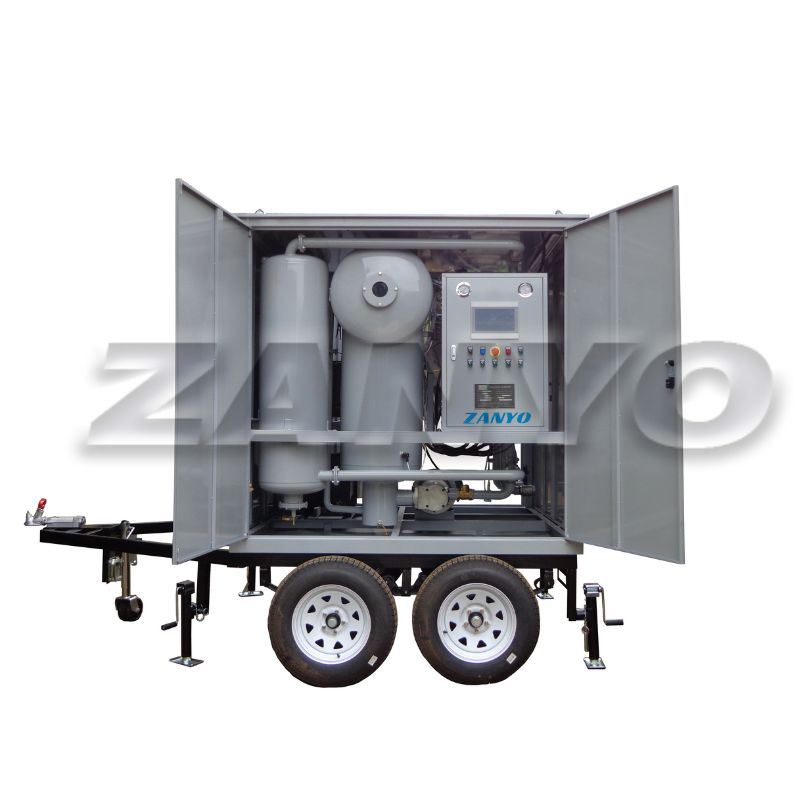
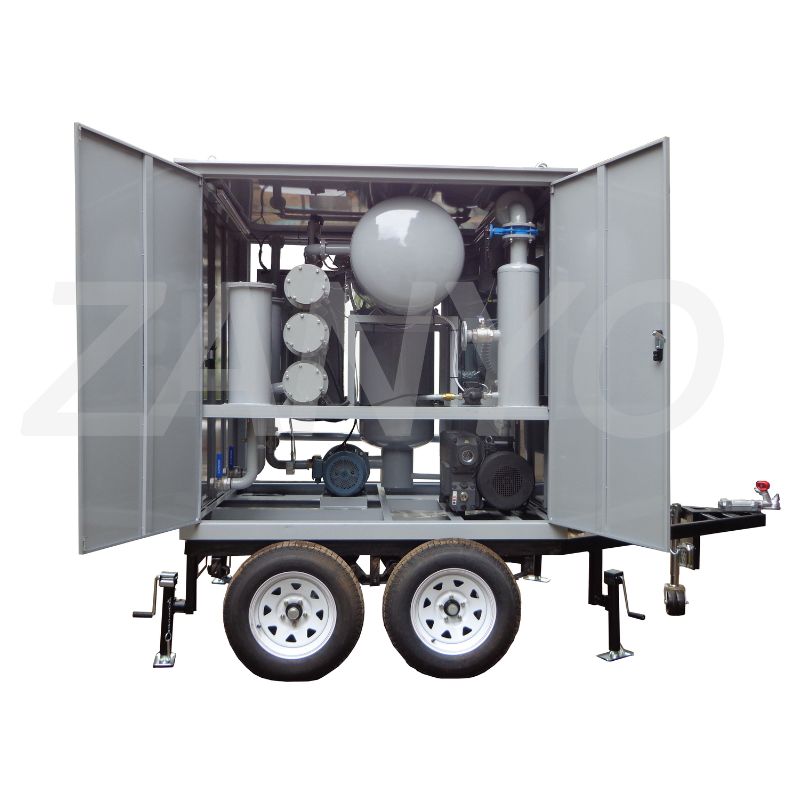
A vacuum transformer oil purifier can heat the incoming oil under controlled conditions and expose it to reduced pressure. This encourages dissolved gases and water vapor to separate from the oil. The extracted gases and moisture are then removed through the vacuum system.
The treatment process can help:
- Reduce dissolved gas content.
- Remove dissolved moisture.
- Improve the dielectric performance of contaminated oil.
- Prepare insulating oil for transformer filling.
- Support routine transformer oil maintenance.
However, vacuum treatment is not a universal solution for every foaming problem. Silicone contamination, incompatible insulating liquids, and severe chemical deterioration require separate assessment and may need specialized treatment or oil replacement.
Conclusion
Transformer oil foaming can result from air leakage, dissolved gas release, moisture vaporization, chemical contamination, incompatible insulating liquids, and deteriorated oil conditions.
The correct solution depends on when the foam appears and what causes it. Inspecting the oil circulation system, testing the insulating liquid, and checking vacuum processing conditions are essential steps.
With appropriate oil quality control, properly maintained equipment, and suitable vacuum degassing and dehydration procedures, excessive foaming can be controlled while maintaining the insulating oil’s required performance.