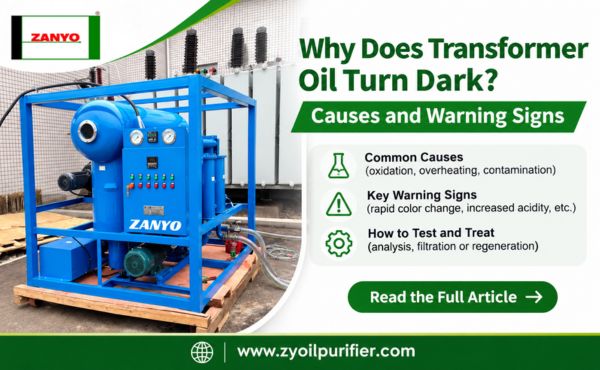
Transformer oil can turn dark because of oxidation, thermal aging, contamination, or decomposition products generated during electrical and thermal stress. A gradual change from pale yellow to amber or brown may accompany normal service aging. However, rapid darkening or blackened oil can indicate a condition that requires investigation.
Dark transformer oil does not automatically mean the oil has failed. Color is a useful warning sign, but laboratory testing is necessary to determine whether the oil can remain in service.
What Does Dark Transformer Oil Indicate?
New mineral transformer oil is generally clear and relatively light in color. During operation, the oil is exposed to heat, oxygen, electrical stress, and materials inside the transformer. These conditions can gradually change its chemical composition and appearance.
A darker color may indicate that oxidation products or other contaminants have accumulated. However, oil color is influenced by the original formulation, previous treatment, and operating history. Two samples with similar colors may have different dielectric strengths, moisture levels, and acid numbers.
The most useful observation is often how quickly the oil color has changed compared with previous samples.
Common Causes of Transformer Oil Darkening
1. Oxidation and Aging
Oxidation is one of the principal causes of transformer oil deterioration. When mineral insulating oil reacts with oxygen, particularly at elevated temperatures, oxidation products gradually develop. Some are acidic or polar compounds that can affect the oil’s electrical properties.
As aging progresses, the oil may become darker. More advanced oxidation can contribute to sludge formation. Sludge is particularly undesirable because deposits on insulating and cooling surfaces may interfere with heat transfer. Increasing acidity combined with declining interfacial tension is often more informative than color change alone.
2. Excessive Operating Temperature
Heat accelerates many chemical aging reactions in transformer oil. Common reasons for elevated temperature include sustained overloading, restricted cooling airflow, faulty cooling fans or pumps, blocked oil circulation paths, and localized overheating caused by internal electrical defects.
Excessive thermal stress can accelerate oil degradation and contribute to decomposition products. If darkening occurs together with abnormal temperature readings, investigate the underlying thermal problem rather than treating only the oil.
3. Carbon and Other Contaminants
Carbonaceous material can darken transformer oil considerably. In equipment exposed to electrical arcing, carbon particles and other decomposition products may accumulate. Load tap changer compartments are particularly relevant because switching operations can generate carbon contamination.
Contamination may also arise from maintenance activities, incompatible fluids, deteriorated materials, or residues introduced during oil handling. Sudden blackening deserves greater attention than a slow, stable color change.
4. Deterioration of Insulating Materials
Transformers commonly contain cellulose-based paper and pressboard insulation. These materials age under temperature, moisture, and electrical stress. Their degradation products can enter the oil and change its chemical properties.
Dark oil alone cannot establish the condition of paper insulation. Additional diagnostics, including furan analysis where appropriate, may be needed to assess cellulose aging.
Warning Signs That Require Further Testing
Darkening becomes more concerning when accompanied by other changes:
- Rapid color change: Possible abnormal degradation or contamination.
- Cloudy appearance: Possible suspended moisture or particles.
- Visible sediment: Insoluble contaminants or deterioration products.
- Increasing acidity: Potential oil oxidation.
- Declining interfacial tension: Accumulating polar contaminants.
- Abnormal dissolved gases: Possible thermal or electrical fault.
These indications should be assessed together rather than interpreted as independent proof of a particular fault. Sudden appearance changes alongside protection alarms or abnormal operating conditions warrant prompt engineering assessment.
How to Test Dark Transformer Oil
Color testing: ASTM D1500 color measurements can help track changes in mineral oil appearance.
Acidity testing: The neutralization number indicates acidic constituents. A rising value may suggest progressive oxidation.
Interfacial tension: A declining value can indicate contamination by polar aging products.
Breakdown voltage: This test assesses the oil’s ability to withstand an applied electrical field under defined laboratory conditions.
Moisture testing: Karl Fischer analysis helps determine water content and supports dielectric assessment.
Dissolved gas analysis: DGA can help identify evidence of internal thermal or electrical faults.
Evaluate the results against relevant maintenance criteria and the transformer’s historical data.
Can Dark Transformer Oil Be Restored?
The appropriate treatment depends on why the oil has become dark. If the main problems are particles, water, and dissolved gases, suitable filtration and vacuum purification may improve its condition.
If significant oxidation products, acidity, and sludge precursors are present, oil regeneration or reclamation may be required. Regeneration uses an adsorbent-based process to remove selected chemical deterioration products. Conventional particle filtration cannot perform the same function.
Replacement may be necessary when oil is severely degraded, contaminated with an unsuitable substance, or cannot be restored economically. Improving the oil does not repair an underlying internal transformer fault.
How to Prevent Premature Oil Deterioration
Monitor transformer temperature and loading. Maintain cooling equipment, inspect sealing systems, and prevent unnecessary exposure to air and moisture. Schedule periodic oil testing and compare results over time.
Where oxidation inhibitors are used, monitor their condition according to the oil specification and maintenance program.
The key is to identify deterioration early. Decisions to filter, regenerate, replace, or continue using the oil must be supported by diagnostic evidence.
Conclusion
Transformer oil generally turns dark because of oxidation, thermal stress, or contamination. Discoloration is a useful warning sign, but not a reliable standalone measure of oil quality. Combining appearance observations with acidity, moisture, breakdown voltage, interfacial tension, and dissolved gas analysis provides a stronger basis for maintenance decisions.