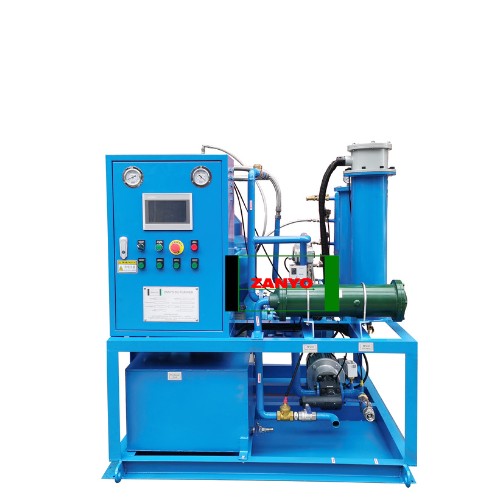
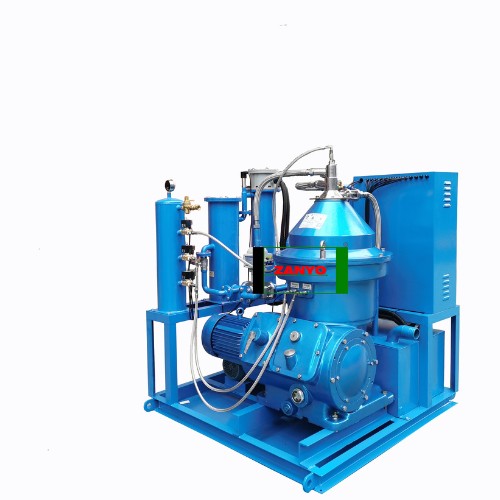
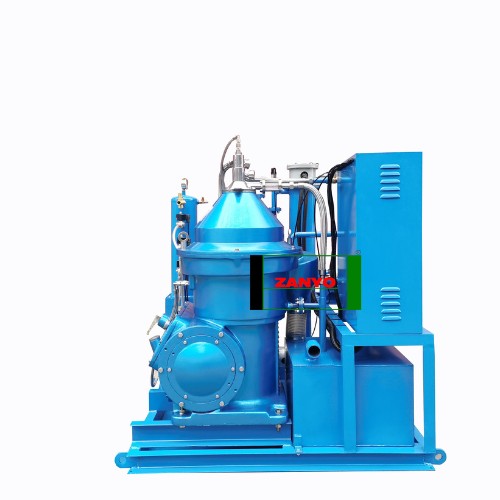
Centrifugal Lube Oil Purifier for Industrial Lubrication Systems
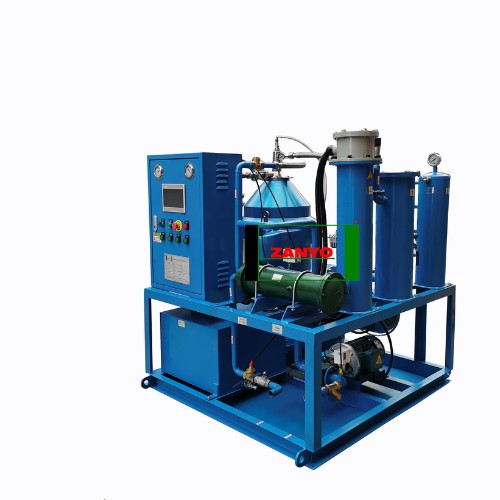
This disc stack centrifugal separator is designed to remove free water and mechanical impurities from lubricating oil through high-speed centrifugal separation. It is not suitable for removing dissolved water, and the density difference between oil and water should be greater than 1%.
- Compact skid-mounted structure
- High-speed rotating bowl
- Integrated pump and motor
- Built-in control cabinet
- Pre-filter protection system
- Optional oil heating unit
- Pressure gauge and valve monitoring
- Easy cleaning and maintenance design
- Custom flow rate and voltage options
- Heavy-duty industrial base frame
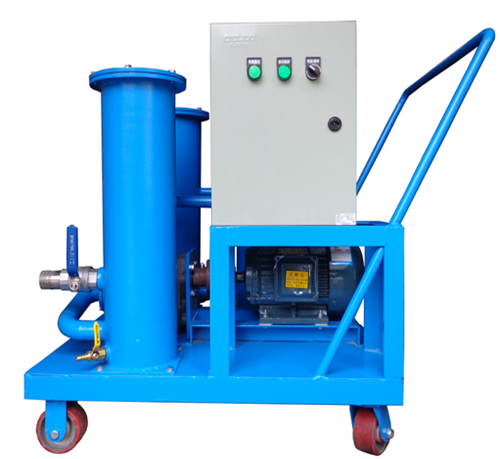
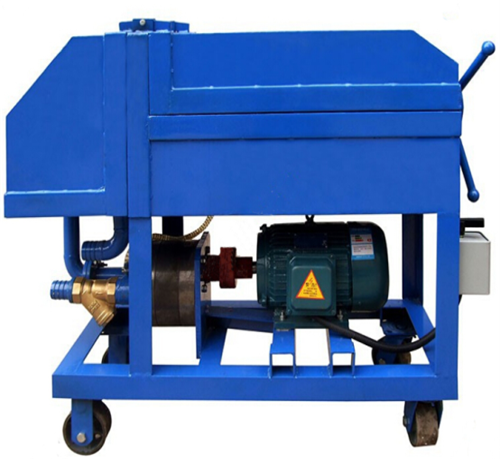
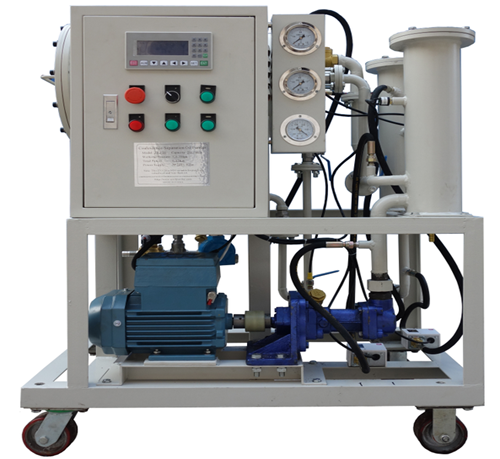
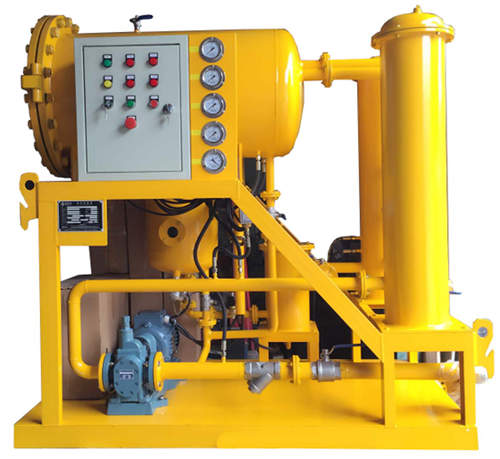
A Centrifugal Lube Oil Purifier is designed for continuous cleaning of lubricating oil used in engines, turbines, marine equipment, hydraulic systems and industrial machinery. The machine uses high-speed centrifugal force to separate free water, sludge, carbon residue, metal particles and mechanical impurities from oil. It is especially suitable for lube oil with heavy contamination, high sludge content or frequent maintenance problems.
The system is usually built with a high-speed separation unit, oil pump, motor, pre-filter, pipelines, valves, gauges and electrical control cabinet. With a compact integrated structure, it can support stable oil circulation and convenient on-site operation. By removing heavier contaminants from lubricating oil, the purifier helps extend oil service life, reduce equipment wear, lower oil replacement cost and improve long-term equipment reliability.
| Index | Unit | ZYCF-1.5 | ZYCF-2 | ZYCF-3 | ZYCF -4 |
| Flow Rate | L/H | 1500 | 2000 | 3000 | 4000 |
| Separating-Factor | a/g | 7231 | 12094 | 8800 | 9400 |
| Running speed | r/min | 7500 | 8300 | 6300 | 8300 |
| Particles | μ | 2 | 1 | ||
| Water content | % | ≤1 | |||
| Power Supply | ~50Hz 380(According to user requirements) | ||||
| Motor Power | KW | 4 | 4 | 8 | 8 |
| Heater Power | KW | 24 | 24 | 30 | 36 |
| Total Power | KW | 28 | 28 | 38 | 44 |
| Sludge-discharge | Manual | Automatic | |||
| Outlet Pressure | MPa | ≤0.2 | |||
| Weight | Kgs | 450 | 480 | 850 | 900 |
| Dimension | mm | 1050*850*1200 | 1200*850*1200 | 1200*800*1200 | 1300*1000*1300 |
Oil Feeding
Contaminated lubricating oil enters the purifier at a controlled flow rate through the inlet system.
High-Speed Rotation
The oil is directed into a rotating bowl. As the bowl spins at high speed, strong centrifugal force is generated.
Contaminant Separation
Heavier contaminants, such as free water, sludge, carbon residue, dirt and metal particles, are pushed toward the outer wall of the bowl. Cleaner oil moves toward the center.
Clean Oil Discharge
The separated oil flows through the clean oil outlet and can return to the oil tank, engine, lubrication system or storage container.
Sludge and Water Collection
Separated water and solid impurities are collected inside the bowl or discharged through the system, depending on the machine design.
Manual or Automatic Discharge
Some models require manual bowl cleaning, while automatic discharge models can remove separated contaminants with less operator intervention.
Why Lube Oil Needs Purification
Lube oil contamination is common in many working environments. Water may enter the system through condensation, leakage or poor storage. Solid particles may come from equipment wear, dust exposure, carbon buildup or oil oxidation. Over time, these contaminants can damage both the oil and the equipment.
Dirty lubricating oil may cause bearing wear, corrosion, blocked oil passages, poor heat transfer, unstable lubrication and shorter equipment service life. In severe cases, contaminated oil can lead to unexpected machine failure and production downtime.
By using a centrifugal lube oil purifier, companies can remove major contaminants before they cause serious damage. Clean oil helps improve equipment reliability, extend oil replacement intervals and reduce waste oil disposal.
Main Contaminants Removed by Centrifugal Purification
Centrifugal oil purification is mainly used to remove free water and heavier solid impurities from lubricating oil. Common contaminants include free water, sludge, carbon residue, metal particles, dust, dirt and oxidation deposits.
It is important to understand that centrifugal purification is not mainly designed for dissolved water removal. If the oil contains dissolved moisture or requires deep dehydration, a vacuum oil purifier may be more suitable. In many oil recycling processes, centrifugal purification can be used first to remove heavy contamination, followed by vacuum dehydration or fine filtration for deeper treatment.
Common Applications
Centrifugal lube oil purifiers are widely used in marine vessels, power plants, steel mills, cement plants, mining equipment, hydraulic stations, engine maintenance workshops and industrial production facilities.
They can be used for engine oil, marine lube oil, turbine oil, hydraulic oil, gear oil, compressor oil and other industrial lubricating oils. For oil recycling projects, they are often used as the first stage of treatment before further filtration or regeneration.
Improve Lube Oil Cleaning Efficiency With Zanyo Centrifugal Oil Purifier
Need a reliable solution for lube oil cleaning or used oil recycling? Contact Zanyo today to discuss your oil condition, processing capacity and purification requirements. Our team can help you choose a suitable centrifugal lube oil purifier for industrial, marine, hydraulic or power equipment applications.