Moisture enters transformer oil through several pathways, including humid air drawn in through breathers, leaking gaskets and seals, damaged conservator systems, and improper oil handling during installation or maintenance. Water can also develop inside the insulation system as cellulose paper ages and decomposes. Once moisture accumulates, it can reduce the dielectric strength of transformer oil, accelerate paper insulation deterioration, and increase the risk of electrical failure.
Understanding where moisture comes from is essential for choosing the right prevention and treatment method. Removing water from the oil without correcting the original source may only provide temporary improvement.
What Causes Moisture in Transformer Oil?
Moisture in transformer insulation generally comes from two main sources: external moisture ingress and internal moisture generation.
External moisture enters when humid air or liquid water passes through openings, damaged seals, or ineffective breathing systems. Internal moisture develops as paper and pressboard insulation deteriorate under thermal, chemical, and oxidative stress.
Water can exist in several forms within a transformer:
- Dissolved water: Water molecules distributed throughout the insulating oil.
- Free water: Separate water droplets or accumulated water at the bottom of the tank.
- Emulsified water: Fine water droplets dispersed in oil, sometimes stabilized by oxidation products.
- Moisture in solid insulation: Water absorbed by cellulose paper and pressboard.
- Water vapor: Moisture present in the gas space above the insulating liquid.
These forms can coexist and move between the oil, paper insulation, and surrounding gas depending on temperature and operating conditions.
1. Atmospheric Moisture Through Transformer Breathers
Atmospheric moisture is a common source of contamination in transformers equipped with conservator breathing systems.
As transformer oil heats up, its volume expands and pushes air out of the conservator. When the oil cools, its volume contracts and the transformer draws air back through the breather.
A silica gel breather removes water vapor from incoming air before it reaches the conservator. However, its moisture-absorption capacity decreases as the desiccant becomes saturated.
If the silica gel is not replaced or regenerated in time, humid air can enter the transformer. Cracked breather housings, damaged connections, and inadequate sealing can create additional moisture pathways.
Prevention: Inspect the breather regularly, check the condition of the silica gel, maintain the correct oil level in oil-sealed breathers, and replace or regenerate saturated desiccant according to the manufacturer’s instructions.
2. Water Ingress Through Leaking Seals and Gaskets
Aging or improperly installed gaskets can allow moisture to enter through transformer covers, bushings, inspection openings, pressure relief devices, radiator connections, and other sealed joints.
Temperature changes make this problem more serious.
When a transformer cools, the internal pressure may decrease. If a gasket or seal is defective, humid air or rainwater can be drawn into the enclosure. Small oil leaks can therefore indicate a potential moisture-ingress pathway, even when the amount of lost oil appears insignificant.
Prevention: Inspect sealing surfaces, flange connections, radiator valves, and bushing seals. Replace deteriorated gaskets and repair leaks instead of repeatedly topping up the oil.
3. Moisture From Damaged Conservator Systems
A conservator accommodates changes in transformer oil volume caused by temperature fluctuations.
Some conservator designs use a rubber bladder or diaphragm to separate the oil from atmospheric air. This arrangement reduces direct contact between the oil and external moisture.
However, a damaged bladder, deteriorated diaphragm, or leaking connection can compromise the separation.
When the barrier fails, humid air may come into contact with the insulating oil. The risk increases when the transformer experiences repeated temperature and pressure changes.
Prevention: Inspect the conservator bladder, diaphragm, connecting pipes, and associated seals. Check oil level indicators and pressure-related abnormalities as part of routine maintenance.
4. Moisture Introduced During Installation and Maintenance
A transformer may contain excessive moisture before normal operation even begins.
This can happen when:
- Core and coil insulation is not adequately dried during manufacturing.
- The transformer remains exposed to humid air during installation.
- Inspection or repair work leaves the tank open for an extended period.
- Wet insulating oil is used during filling.
- Oil storage tanks, hoses, pumps, or processing equipment introduce water contamination.
Oil handling procedures are particularly important because even properly dried oil can become contaminated if it comes into contact with wet equipment or humid air.
Prevention: Use clean, dry oil storage and transfer equipment. Minimize the time that transformer insulation is exposed to the atmosphere. Follow the manufacturer’s vacuum drying and oil-filling procedures.
How Does Transformer Insulation Aging Increase Moisture?
Not all moisture originates from the surrounding environment. Aging transformer insulation can also contribute to increasing water content.
Most transformers use cellulose-based materials, including electrical paper and pressboard, to provide insulation around conductors and structural components.
These materials contain water as part of their chemical structure. Under prolonged exposure to elevated temperatures, oxygen, and other aging factors, cellulose undergoes chemical degradation.
This process breaks down cellulose chains and generates degradation products, including water.
Oil oxidation can also contribute to moisture formation. As insulating oil reacts with oxygen, it produces acids and other oxidation by-products. These reactions can increase the moisture content and accelerate deterioration of the oil-paper insulation system.
An important characteristic of transformer moisture is that most of the total water is generally stored in the solid insulation rather than in the oil.
When transformer temperature rises, some moisture migrates from paper into oil. When the temperature falls, moisture can move back toward the cellulose insulation.
Therefore, a low water reading in an oil sample does not necessarily mean that the entire transformer insulation system is dry.
How Does Moisture Affect Transformer Oil and Insulation?
Excessive moisture creates several problems for transformer operation.
Reduced dielectric strength: Water contamination can reduce the electrical breakdown strength of insulating oil. When moisture approaches or exceeds the oil’s saturation limit, free water may form, increasing the risk of electrical discharge.
Accelerated paper insulation aging: Water promotes cellulose hydrolysis, which breaks down the polymer structure of electrical paper. This reduces its mechanical strength and shortens insulation service life.
Increased risk of bubble formation: Under high-temperature conditions, moisture within cellulose insulation can contribute to water vapor bubble formation. Bubbles near energized conductors may weaken insulation and increase the risk of dielectric failure.
Increased oxidation and sludge formation: Moisture and oxygen contribute to deterioration of the oil-paper system. Oxidation products can form acids and sludge, affecting oil quality and heat transfer.
Moisture control is therefore important for both insulating oil performance and the long-term condition of solid insulation.
How to Detect Moisture in Transformer Oil
Accurate moisture assessment requires more than checking the appearance of the oil. Water may remain dissolved and invisible even when its concentration is increasing.
Karl Fischer Water Content Testing
Karl Fischer titration is a widely used method for measuring the absolute water content of insulating oil.
Results are generally expressed in milligrams of water per kilogram of oil (mg/kg), commonly referred to as ppm.
This test helps maintenance personnel identify changes in water concentration and evaluate whether oil dehydration may be necessary.
However, the sampling temperature and oil condition should also be considered when interpreting results.
Relative Water Saturation
Absolute water content does not provide the complete picture because water solubility changes with oil temperature and condition.
Relative water saturation indicates how much of the oil’s water-holding capacity is being used.
It is commonly expressed as:
Relative water saturation (%) = (Actual water content / Water saturation limit at the same temperature) × 100
A transformer oil sample with a relatively low ppm value may still have high relative saturation at a lower operating temperature.
Conversely, warmer oil can dissolve more water without necessarily reaching saturation.
Assessing Moisture in Paper Insulation
Oil testing alone cannot reliably determine the complete moisture condition of cellulose insulation.
For a more comprehensive assessment, engineers may combine oil moisture testing with temperature records, operating history, dielectric response measurements, and moisture equilibrium analysis.
IEC 60422 provides guidance on monitoring and maintaining mineral insulating oils, including the interpretation of water content and its relationship with oil-paper insulation.
How to Prevent and Remove Moisture From Transformer Oil
Moisture control should address both the source of contamination and the water already present in the insulation system.
1. Eliminate moisture ingress pathways.
Repair leaking gaskets, replace damaged seals, maintain conservator integrity, and ensure that breathers are functioning correctly.
2. Maintain the breathing system.
Inspect silica gel regularly and replace or regenerate it when its moisture-absorption capacity is exhausted. Follow the manufacturer’s maintenance instructions.
3. Protect oil during storage and handling.
Use sealed storage tanks, dry pipelines, and clean transfer equipment. Verify the quality of oil before filling the transformer.
4. Use vacuum transformer oil dehydration when required.
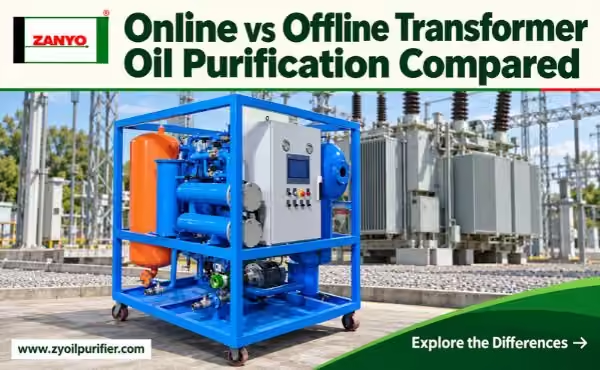
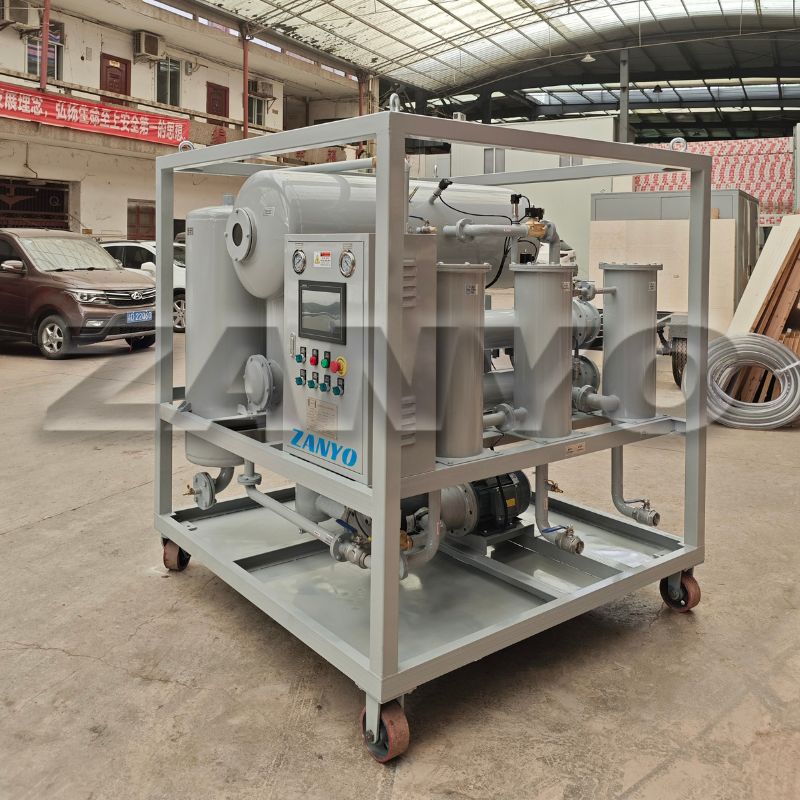
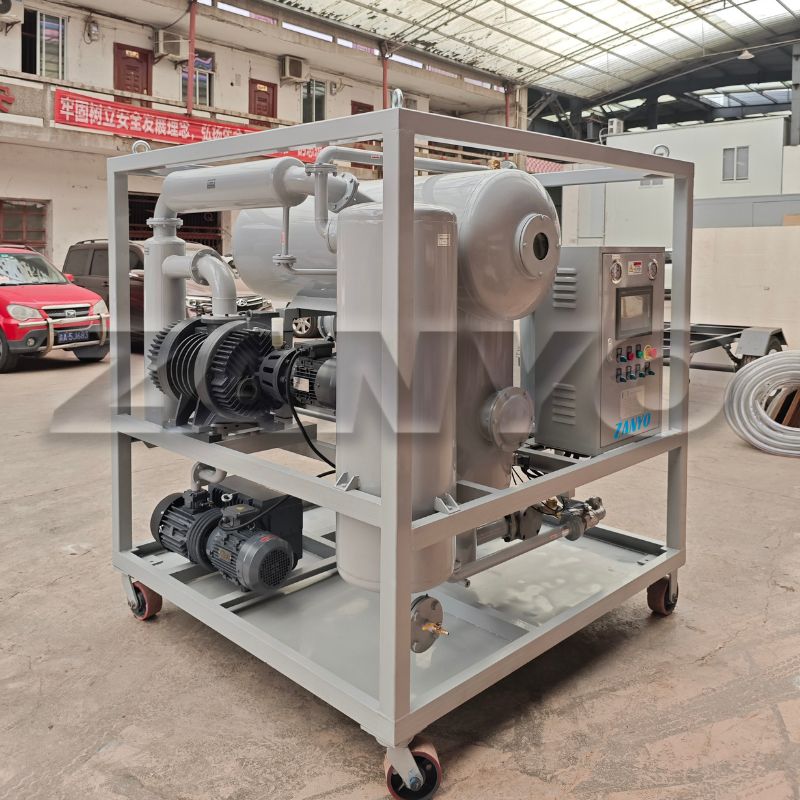
A vacuum transformer oil purifier heats the insulating oil under controlled conditions and exposes it to reduced pressure. This promotes the evaporation and separation of moisture from the oil.
The processed oil is then filtered and returned to the transformer or transferred to a clean storage tank, depending on the treatment arrangement.
Vacuum dehydration is particularly useful when dissolved water or moisture contamination needs to be reduced. However, removing moisture from circulating oil does not automatically remove all the water stored in paper insulation. Additional circulation, heating, or dedicated insulation drying procedures may be required for severely wet transformers.
When Is Vacuum Transformer Oil Dehydration Necessary?
Vacuum dehydration should be considered when oil moisture testing indicates excessive water content, relative saturation is elevated, or moisture trends show a persistent deterioration in insulation condition.
It is also useful when treating insulating oil after maintenance, repairing a leakage problem, or preparing oil for transformer filling.
The appropriate treatment depends on the oil’s condition, transformer design, moisture distribution, and the amount of water retained in the solid insulation.
For heavily moisture-contaminated transformers, a complete drying strategy may require repeated oil circulation under controlled temperature and vacuum conditions. Simply processing the oil once may not achieve the required dryness of the entire oil-paper insulation system.
Conclusion
Moisture enters transformer oil through atmospheric breathing, defective seals, damaged conservator components, and improper oil handling. It can also increase internally as cellulose insulation and insulating oil age.
Effective moisture management requires identifying the contamination source, measuring water content correctly, and evaluating the condition of both oil and paper insulation. Repairing moisture ingress pathways and applying suitable vacuum dehydration or insulation drying procedures help maintain dielectric performance and extend transformer service life.