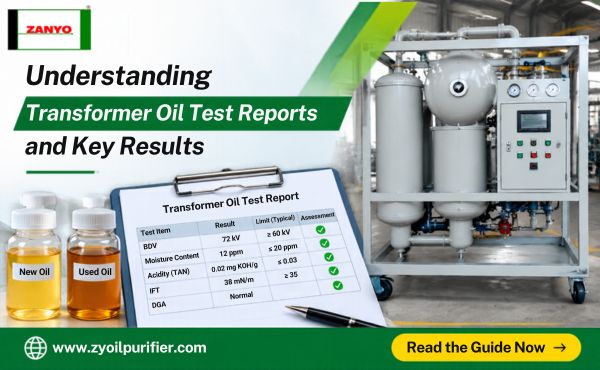
A transformer oil test report is a snapshot of oil and transformer health. It combines a selected group of laboratory tests into one record. Routine transformer oil test matters for the same reason a blood test matters: it catches problems before failure, supports loss prevention, and helps estimate remaining life.
This guide explains how to read transformer oil test reports. You will learn what dielectric breakdown voltage, moisture content, acid number, dissolved gas analysis (DGA), and interfacial tension reveal. Supporting tests, including furan compounds and PCB screening, also appear in dga and bdv reports.
Expect practical guidance on trends, standards, sampling errors, and follow-up actions. The focus stays on interpretation, not theory. A low breakdown voltage or rising DGA signals trouble early.
What Transformer Oil Test Reports Include
Core Transformer Oil Analysis Tests
Transformer oil analysis is not a single measurement. It is a group of laboratory methods, and the laboratory selects them according to the transformer type, its age, its condition, and the reason for testing. A routine transformer oil test report usually combines five core measurements.
Dielectric breakdown voltage (BDV) shows how well the oil resists electrical stress. Moisture content, often called water content, records dissolved water in parts per million. Acid number tracks acidic byproducts of oil aging. Dissolved gas analysis (DGA) identifies gases generated by thermal or electrical faults. Interfacial tension reflects the buildup of polar contaminants. Together, these transformer oil tests describe insulating quality and the pace of degradation.
The choice of transformer oil testing methods matters. A utility may order a full panel for a critical unit and a shorter set for a small distribution transformer. Each oil test parameter answers a different question, so the panel should match the decision at hand.
Supporting Tests and Screens
Supporting tests add depth to the core panel. Furan analysis of transformer oil estimates paper condition, because furans form when cellulose insulation degrades. Screen tests check physical properties quickly. PCB testing identifies prohibited contaminants, and this test is susceptible to false positives, so a positive screen warrants confirmation before anyone acts on it.
Oil testing serves several purposes. It evaluates oil and paper condition, helps time maintenance, and supports an overall health assessment. Regulators sometimes require it. Reliable transformer oil test reports therefore depend on a panel chosen for the unit, not a fixed package applied to every transformer. Good oil analysis pairs each result with the question it was ordered to answer.
Key Transformer Oil Test Results
Breakdown Voltage, Moisture, and Interfacial Tension
Each core measurement answers a different question about insulating quality. An acceptable breakdown voltage is a key parameter for judging insulating quality. This test applies a rising voltage across an oil sample until a spark crosses the gap. A low result means the oil tolerates less electrical stress. Moisture is the usual culprit. Water content in oil rises from breathing, leaks, or paper aging, and even small amounts depress BDV sharply. That is why transformer oil dielectric testing pairs the two measurements. A falling BDV with rising water content points to ingress, not to oil aging.
Interfacial tension moves in the opposite direction. Fresh oil holds a high value. Polar contaminants, acids, and oxidation products collect at the oil-water boundary and pull the number down. A declining trend in interfacial tension often appears before the acid number moves. Read together, these three results separate contamination problems from chemical aging. Transformer oil moisture content above the expected baseline deserves attention even when BDV still passes, because the margin has already narrowed.
Acid Number and Dissolved Gas Analysis
Acid number measures acidic byproducts of oxidation. A rising value signals that the oil is degrading and that sludge may follow. Sludge deposits on windings and blocks heat transfer. Acid number also tracks the oil’s remaining service life, so the trend matters more than any single reading.
Transformer oil dissolved gas analysis takes a different approach. Fault gases come from degradation or fault conditions inside the transformer. Thermal stress, arcing, partial discharge, and overheating each generate characteristic gas patterns. DGA patterns therefore point to fault type. Elevated hydrogen with acetylene suggests arcing. Methane and ethylene rising together suggest overheating. Carbon oxides point toward paper involvement. A DGA and BDV testing program combines gas interpretation with insulating strength, and the two views reinforce each other.
The dga method is sensitive enough to catch incipient faults long before a failure. Routine dga sampling builds the history that makes interpretation possible. Without prior dga results, a single gas reading is hard to judge.
The same logic applies across oil analysis: every number gains meaning from comparison. Oil analysis reports that include dga alongside chemical tests give the fullest picture. Skilled oil analysis reads the gas pattern, the acid trend, and the BDV together.
Oil testing intervals should shorten when dga shows a rising gas trend. Good oil analysis turns these signals into maintenance decisions. Consistent oil testing protects the asset. The dga record becomes the backbone of the report. Every dga result deserves a place in the trend chart. A dga flag alone is not a verdict. The dga pattern, read with context, tells the story.
Interpreting Transformer Oil Test Results
Interpretation begins with comparison. A number on its own says little. The same reading can be normal for one unit and alarming for another. Reading transformer oil test results well means placing each value against two references: the new-oil baseline and the unit’s own history. Neither reference appears on a single report. Both require deliberate recordkeeping across the asset’s life. A report read in isolation invites either panic or complacency.
Trends and New-Oil Baselines
A new-oil baseline comes from commissioning samples or from the first sample after an oil change. That baseline records how the fresh oil performed on bdv, water content, and acid number in that specific unit. Future bdv readings are judged against it, not against a generic figure. Oil analysis gains power when every bdv result sits beside its baseline. A bdv that falls steadily across three samples tells a clearer story than one low bdv reading.
The direction of change matters more than the absolute value. Trend lines reveal slow drift that single samples conceal. The same holds for dga. A single dga sample is a snapshot; a series of dga results is a trajectory. Oil analysis depends on that trajectory. Rising dga trends across successive samples deserve more attention than a stable value, even a slightly elevated one.
Skilled oil analysis reads gas patterns over time and asks whether the rate of change is accelerating. Each dga report should join the trend chart. Oil testing intervals should respond to rising gases, shortening when concentrations climb. Consistent oil testing builds the record that makes interpretation possible.
Good oil analysis treats gas and insulating reports as linked evidence, because strength and gas generation often move together. A rising bdv trend after processing confirms the treatment worked. Baselines should be refreshed after any oil treatment, because processed oil behaves differently from aged oil. A unit with no baseline is hard to judge, so establishing one early pays off for decades.
Standards and Operating Context
Published guidance supports interpretation. The IEEE C57.104 guide addresses dga interpretation and places dga results within condition bands rather than pass-fail lines. Even so, a single out-of-limit value is rarely conclusive. Load, age, temperature, and service history all shape what a reading means.
A bdv dip during a heat wave may reflect temporary moisture migration, not permanent degradation. A dga flag on an old unit with a long stable record carries different weight than the same flag on a new one. Oil analysis should weigh context before anyone acts. The results of transformer oil testing inform decisions only when read this way.
Oil test results and transformer oil test reports serve as decision tools, and oil analysis turns them into maintenance priorities. A bdv value near the limit on a heavily loaded unit warrants closer review. Review bdv results alongside moisture data. A dga pattern that shifts suddenly warrants investigation.
Careful oil analysis compares dga and bdv reports against both standards and operating reality. Seasonal temperature swings, recent loading changes, and maintenance history belong in the file beside each sample. Two units with identical readings can need different responses when their duty cycles differ.
Judgment improves when the reviewer knows what changed since the last sample. Documenting the reasoning behind each decision preserves that context for the next review cycle.
Reliable Transformer Oil Testing
Common Sampling Mistakes
Most unreliable results begin at the sampling point, not in the laboratory. Contamination is the leading culprit. Dust, moisture, or residue from an unclean syringe or tubing enters the sample and depresses breakdown voltage. A sample drawn from the wrong port introduces another error. Drain valves at the bottom of the tank collect sediment and free water, so a sample taken there misrepresents the bulk oil. Improper containers cause similar distortion. Clear plastic bottles allow light exposure and absorb gases, and reused containers carry traces of earlier fluids.
Delayed shipping compounds every one of these problems. Dissolved gases migrate out of the oil over time, and moisture equilibrates with the container headspace. A sample that sits for days before analysis no longer reflects conditions inside the transformer. Each of these mistakes skews oil sampling data in a predictable direction, and the resulting report can trigger unnecessary maintenance or hide a real fault.
Best Practices
Sound oil sampling follows a fixed procedure every time. Flush the sampling line and discard the first volume so the sample represents the tank, not the valve. Use clean, dedicated containers appropriate to the test, and fill them with minimal headspace. Draw from the designated sampling valve, never from a drain point. Label each container with the unit identifier, date, and time, then ship promptly to the laboratory.
Consistent transformer oil testing methods protect comparability across years of records. Train every technician on the same procedure, because a change in technique between samples can mimic a change in oil condition. Schedule regular transformer oil testing at stable operating conditions where possible.
Reliable oil sampling supports dga and bdv testing, and both depend on a sample that truly represents the unit. Treat every transformer oil test as a chain: the weakest link is the sample itself. Four disciplined oil testing habits—flush, correct port, proper container, fast shipping—carry more weight than any single laboratory method.
Acting on Transformer Oil Test Results
Monitor, Process, or Repair
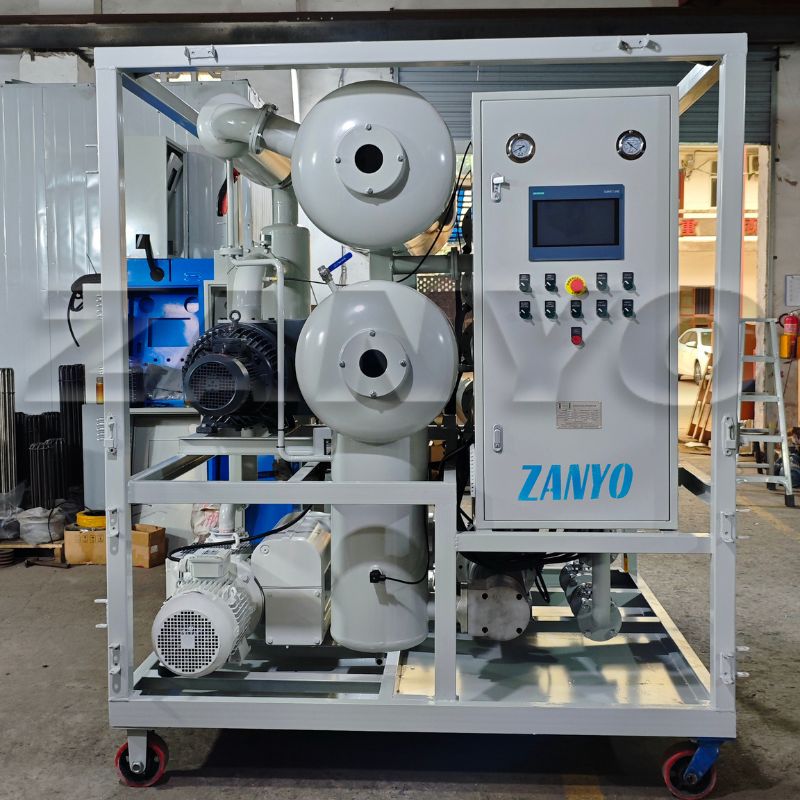
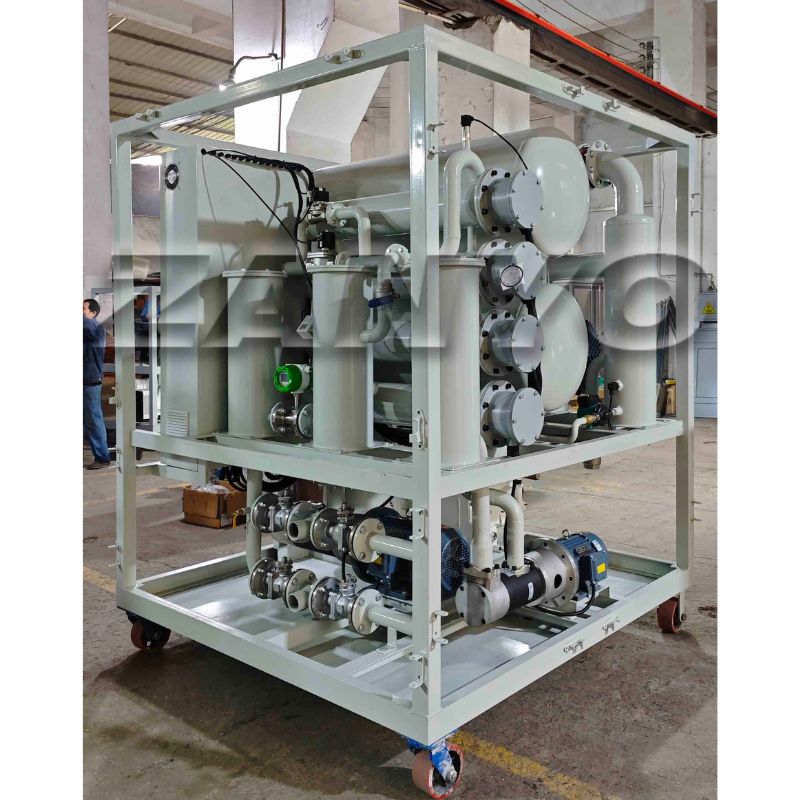
Transformer oil test results point toward one of three responses. Stable readings across several samples call for continued monitoring. A slow bdv decline with rising moisture suggests oil processing or reclamation, which removes water and restores insulating strength. A sudden dga shift, arcing gases, or falling interfacial tension with rising acid number warrants investigation or repair. Oil analysis should match the pattern, not a single number, to the action.
Each path carries its own follow-up. After processing, oil analysis confirms success through a recovered bdv and a lower water content. After a repair, dga sampling verifies that gas generation has stopped. When results stay quiet, oil testing continues on schedule. The results of transformer oil testing guide the choice, and oil analysis records whether the choice worked.
Setting Priorities and Intervals
Results should also set the testing schedule. A unit with a rising dga trend needs shorter intervals than a stable unit. A transformer with a healthy bdv history can safely extend the gap between samples. Regular transformer oil testing at fixed intervals suits most fleets, with extra dga samples added when gases climb. Oil analysis becomes proactive when intervals respond to evidence.
Document every decision beside the sample record. Note the reading, the reasoning, and the action taken. Future oil analysis then compares outcomes against intentions. This habit turns transformer oil test results into a maintenance decision tool and a way to estimate remaining transformer life.
Conclusion
Transformer oil test reports reward careful reading. Results gain meaning as trends, measured against new-oil baselines and published standards. Operating context completes the picture. Load, age, and temperature shape every interpretation.
Trustworthy data starts at the sampling valve. Clean containers, the correct port, and prompt shipping protect every result that follows.
Convert findings into a clear plan: continued monitoring, oil processing, or repair. Document each decision beside its sample record. Future oil testing then compares outcomes against intentions.
Used this way, oil testing becomes a practical maintenance decision tool. Each report also supports a realistic estimate of remaining transformer life.
FAQ
How often should a transformer oil test report be produced?
Most fleets test on a fixed schedule, then shorten the gap when dissolved gas analysis shows a rising trend. A unit with stable results and a healthy breakdown voltage history can safely extend the interval. Let evidence set the cadence.
Which result matters most in a transformer oil test report?
No single value decides the outcome. Breakdown voltage, moisture, acid number, and dissolved gas analysis each answer a different question. Interpretation weighs the trend across all of them against the new-oil baseline and the unit’s operating context.
Can one bad reading justify immediate action?
Rarely. A single out-of-limit value is seldom conclusive. Load, age, temperature, and service history all shape what a reading means. Confirm the pattern across prior samples before committing to processing or repair.
Why does sampling quality affect dissolved gas analysis so much?
Dissolved gases migrate out of the oil during storage, and moisture equilibrates with container headspace. A delayed or contaminated sample no longer represents conditions inside the tank. Flush the line, use the correct valve, and ship promptly.
What separates oil processing from repair?
A slow breakdown voltage decline with rising moisture points to processing, which removes water and restores insulating strength. A sudden dissolved gas shift or arcing gases calls for investigation or repair. Match the pattern, not one number, to the response.