Online transformer oil purification treats oil while the transformer remains energized. Offline purification takes place after the transformer has been taken out of service. Both approaches can improve oil condition, but the better choice depends on the maintenance objective, equipment condition, available outage time, and suitability of the treatment system.
For a facility that needs uninterrupted power, online treatment may offer a practical way to manage moisture and other contaminants. When inspections, repairs, or more extensive insulation drying are required, offline treatment provides additional options.
The key is to compare the complete treatment plan. Whether a transformer stays energized does not, by itself, determine how thoroughly its oil or insulation will be treated.
Online and Offline Transformer Oil Purification
Online Purification During Transformer Operation
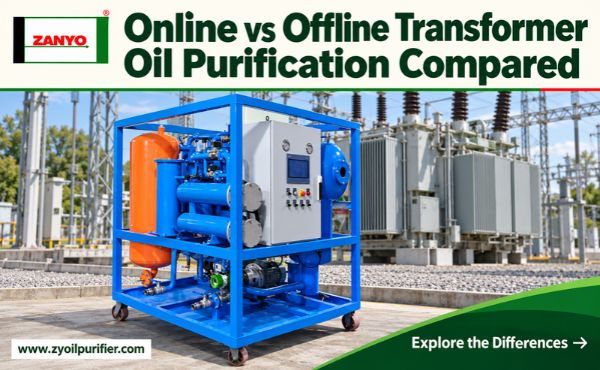
An online transformer oil purification system draws oil from the transformer, processes it in an external circuit, and returns the treated oil while the transformer continues operating.
Depending on its design, the system may remove moisture, particles, and dissolved gases. However, these capabilities should be checked individually. A moisture-removal unit using absorbent media does not necessarily provide the same functions as a vacuum purifier.
Online treatment can be temporary, with portable equipment connected for a defined maintenance period, or part of a longer-term installation. “Online” describes the transformer’s operating state, rather than requiring permanent treatment.
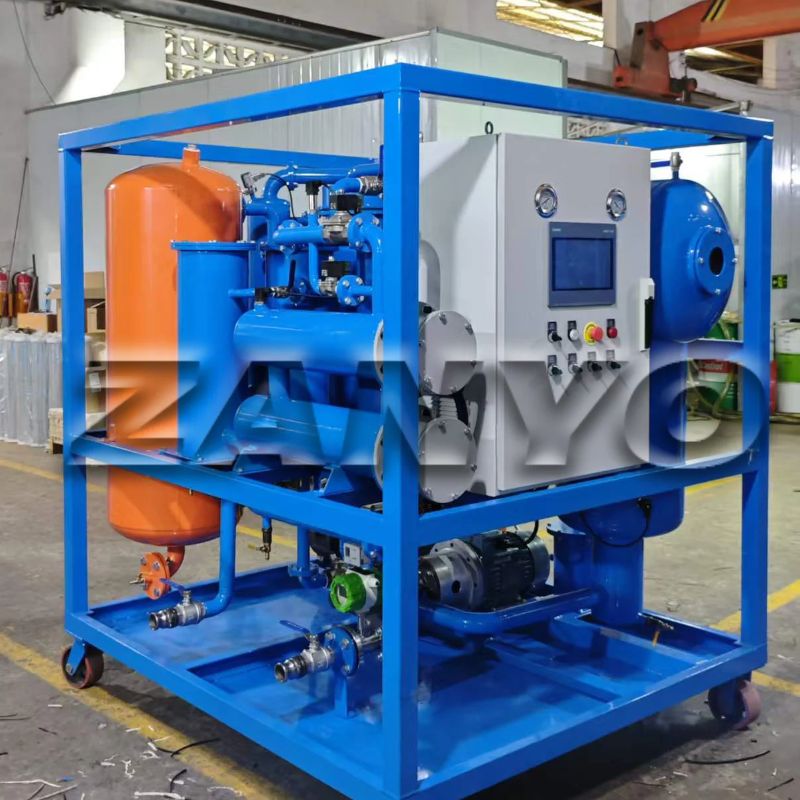
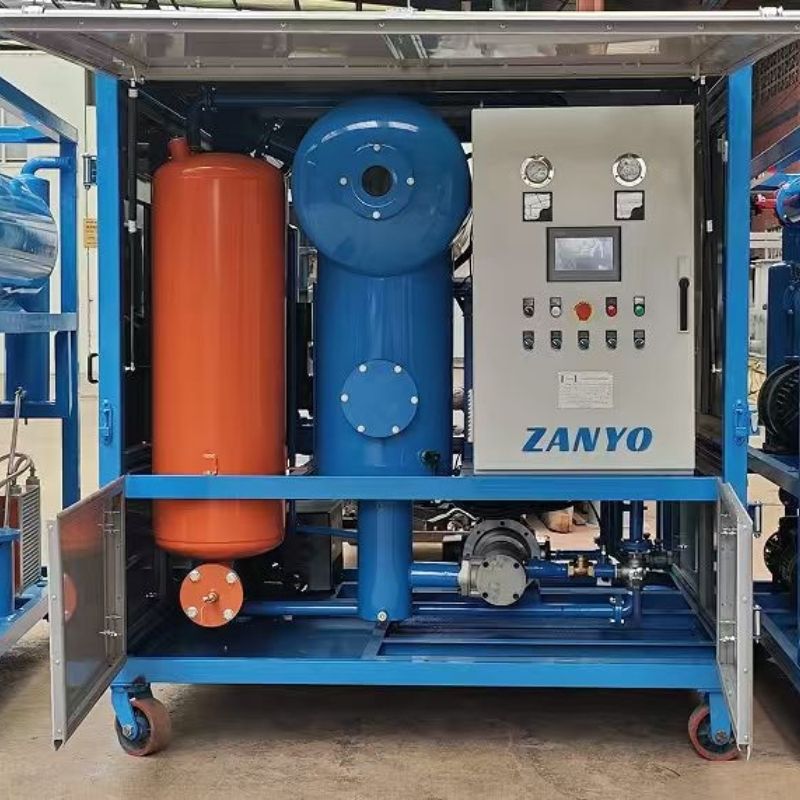
Purpose-built systems are available that use heat and vacuum in an external processing chamber while the transformer remains energized. Their suitability depends on the application and protective features provided.
Offline Purification During a Planned Outage
Offline purification takes place with the transformer de-energized and isolated for maintenance.
Oil may circulate between the transformer and the purification equipment without being completely drained. Alternatively, it may be transferred to separate storage for treatment, inspection, or repair work.
An outage also makes additional drying methods available where the transformer design permits them. These may involve heating the active part or applying vacuum to an appropriately rated tank under an approved procedure.
Therefore, offline oil purification and complete transformer dry-out should be treated as different scopes of work, even when they form part of the same maintenance project.
Key Differences Between Online and Offline Purification
| Factor | Online purification | Offline purification |
|---|---|---|
| Transformer operation | Remains energized during treatment | Removed from service |
| Main advantage | Treatment with continued operation | Greater flexibility for maintenance |
| Equipment requirements | Designed and approved for energized application | Selected for the planned offline process |
| Oil circulation | Must suit energized transformer conditions | More processing options may be available |
| Inspections and repairs | Limited by operating conditions | Can be coordinated with the outage |
| Paper insulation drying | Usually indirect, through moisture transfer into oil | Indirect or additional drying methods |
| Cost considerations | Equipment, monitoring, connection, and treatment duration | Processing plus outage and related maintenance |
| Completion criteria | Agreed test results and operating trends | Agreed test results and return-to-service requirements |
Neither method automatically produces better oil.
A suitable online vacuum purifier can provide effective dehydration and degassing. Conversely, a short offline treatment may improve the oil without removing enough moisture from the solid insulation.
The useful comparison is between two defined proposals: what each system removes, how it operates, how long treatment continues, and how the result will be verified.
Moisture Removal from Oil and Paper Insulation
A transformer’s insulation system includes both insulating oil and solid materials, such as paper and pressboard.
Removing water from the oil is only part of moisture management. Water held in solid insulation must migrate into the surrounding oil before an external oil treatment system can remove it.
This explains why oil samples can improve quickly while the overall drying process takes considerably longer. Once purification stops, remaining moisture in the paper may move back into the oil.
This indirect drying process uses the oil to transport moisture out of the paper and into the dehydration system. Treatment planning should consider the amounts of oil and cellulose, initial moisture condition, and analytical results.
For buyers, the practical question is:
Is the project intended to improve oil quality, reduce moisture in solid insulation, or achieve both?
These objectives can require different treatment durations and verification methods.
A purifier’s low outlet moisture reading demonstrates the condition of the oil leaving that machine. It does not independently prove that the paper insulation throughout the transformer has reached the desired condition.
Operating Requirements for Online Oil Purification
Online treatment requires equipment and procedures appropriate for an energized transformer.
An external oil circuit introduces connections, hoses, valves, pumps, and controls that must operate reliably alongside the transformer. The treatment plan needs to account for oil loss, air entry, abnormal flow, temperature, and equipment shutdown.
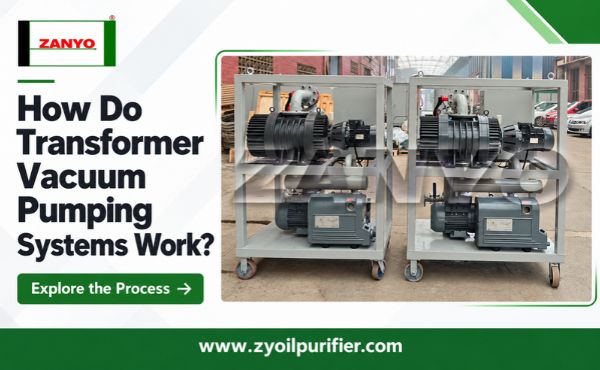
The vacuum location is particularly important. In online vacuum purification, oil is exposed to reduced pressure inside the external purifier. This must not be confused with applying vacuum directly to an energized transformer tank.
External vacuum processing and transformer tank evacuation are different procedures. Energized treatment also requires additional monitoring and careful control of oil flow.
Before selecting online treatment, the owner and service provider should establish:
- Whether the transformer and its connections suit the proposed process.
- Which contaminants the equipment will remove.
- How abnormal oil flow or oil loss will be detected.
- Which conditions trigger automatic shutdown or isolation.
- How operating staff will monitor treatment.
- Whether connection and disconnection require an outage.
That last point affects scheduling. Treatment may occur while energized even when preparing the connections requires a separate maintenance window.
Online purification should therefore be evaluated as a complete installation and operating arrangement, rather than simply as a purifier connected to a running transformer.
Suitable Applications for Each Purification Method
Online Treatment for Maintenance Without an Operating Outage
Online treatment may be considered when continued operation is important and the transformer has been assessed as suitable for energized processing.
Examples include industrial facilities with limited backup capacity and sites where arranging an outage is difficult. Extended treatment may also help maintain low oil moisture while water gradually migrates from solid insulation.
However, purification does not repair an internal electrical or thermal fault. If testing indicates an active problem, removing the resulting gases or moisture must not replace investigation of the cause.
A practical online proposal should explain both the expected oil improvement and how transformer condition will be assessed during treatment.
Offline Treatment Alongside Inspection and Corrective Work
Offline treatment often fits projects that already require a shutdown.
For example, a transformer may need seal repairs, component replacement, internal inspection, or other corrective work. Coordinating oil processing with those tasks can make better use of the outage.
Offline treatment also allows consideration of drying methods beyond external oil circulation, subject to transformer construction and manufacturer requirements.
Before selecting the drying method, check whether the tank is suitable for vacuum treatment and consider the condition of older equipment.
The availability of an outage therefore creates more options. It does not mean that every offline transformer should be drained or subjected to tank vacuum.
Treatment Cost and Scheduling
Comparing service prices alone can give a misleading result.
For online treatment, the total cost may include connection preparation, protective controls, monitoring, repeated sampling, and a longer operating period.
For offline treatment, the calculation should include the effect of the outage, temporary power arrangements, labor, oil handling, and return-to-service activities.
A higher processing rate also does not guarantee a shorter successful project. Rapid oil circulation and gradual moisture release from paper are different processes. A large purifier cannot eliminate the time needed for water to leave solid insulation.
For a fair quotation comparison, give suppliers the same project information:
| Information | Why it matters |
|---|---|
| Transformer details and oil type | Establishes equipment compatibility |
| Oil volume and available test results | Helps define treatment scope |
| Required operating status | Determines online or offline requirements |
| Site access and connection points | Affects setup and logistics |
| Maintenance objective | Separates oil conditioning from insulation drying |
| Acceptance criteria | Makes proposals and results comparable |
Ask each supplier to identify its assumptions. A quotation based on a fixed number of passes is difficult to compare with one based on achieving and verifying agreed results.
Treatment Verification and Follow-Up Testing
Agree on testing before treatment begins.
Moisture content and dielectric breakdown voltage are useful, but they describe different aspects of oil condition. Where relevant, the assessment may also include particles, acidity, dielectric losses, and dissolved gases.
Moisture, breakdown voltage, and other diagnostic tests provide complementary information about oil condition. A strong result from one test does not replace the others.
Sampling should also represent the maintenance objective. Testing only the purifier outlet can miss the condition of oil remaining inside the transformer.
Record sample location, temperature, treatment status, and timing. These details make later comparisons more meaningful.
Degassing changes the dissolved gas background, so retain the pre-treatment DGA report and processing history. A lower gas concentration after purification should not, by itself, be interpreted as evidence that the original gas-producing fault has disappeared.
Finally, arrange follow-up testing appropriate to the transformer. A later moisture increase deserves investigation, especially when the initial improvement was measured immediately after processing.
FAQs
Can the same purifier handle online and offline treatment?
Some equipment can support both applications, but suitability must be confirmed. A machine intended for offline use should not be assumed suitable for an energized transformer simply because its flow rate can be adjusted.
Does offline purification always require draining the transformer?
No. Offline treatment can involve circulating oil through an external purifier while the transformer remains filled. Draining depends on the maintenance work and drying method selected.
Can purification restore severely aged transformer oil?
Physical purification mainly addresses water, gases, and particles. Oil affected by chemical deterioration may require reclamation or replacement following assessment. Removing moisture does not reverse ageing of the paper insulation.
Conclusion
Online transformer oil purification offers a way to treat suitable equipment while maintaining operation. Offline purification provides more flexibility when inspections, repairs, or additional drying methods are needed.
Choose between them by defining the maintenance objective, checking equipment compatibility, and agreeing on meaningful acceptance tests. The best proposal explains what will be improved, how the transformer will be protected, and how the result will be confirmed.