Choose transformer oil purification machines by identifying what must be removed, defining the inlet and target oil condition, calculating the available processing window, and matching treatment technology to the site. Transformer voltage alone does not determine the correct machine. Oil volume, water condition, dissolved gases, particles, oil chemistry, required passes, connection layout, fluid type, and operating environment all affect selection.
Rated flow is only one part of performance. Two machines with the same liters-per-hour capacity can deliver different results because heating control, vacuum level, oil dispersion, residence time, filtration, and vapor handling differ.
Diagnose the Oil Problem First
Oil tests should guide equipment selection. Visual appearance may reveal free water or heavy particles, but it cannot quantify dissolved moisture, dissolved gas, acidity, dielectric performance, or aging products.
| Oil condition | Treatment function to evaluate | Important verification |
|---|---|---|
| Free water | Water separation, filtration, and suitable vacuum treatment | Inlet water load and condensate handling |
| Dissolved or emulsified water | Controlled heating and vacuum dehydration | Inlet and target moisture using consistent test methods |
| Dissolved air or gases | Vacuum degassing | Gas condition, contact method, and required outlet result |
| Suspended particles | Staged mechanical filtration | Filter efficiency and required cleanliness |
| Acidity, sludge, or soluble aging products | Adsorbent-based regeneration | Oil chemistry, inhibitor management, adsorbent handling, and waste |
Mechanical filters remove solids but do not reliably remove dissolved water or gases. Vacuum dehydration and degassing address moisture and gas but do not automatically correct acidity or remove all soluble degradation products. Regeneration is a separate process that may use adsorbents to treat selected oil-aging compounds.
If dissolved-gas analysis indicates combustible gases, removing them does not repair the electrical or thermal fault that produced them. Fault diagnosis should precede or accompany oil treatment.
Match Treatment Technology to Contamination
Mechanical filtration uses progressively finer elements to capture particles while controlling pressure drop. Coarse inlet stages protect pumps and heaters, while final filters support the required cleanliness. Buyers should ask for filter efficiency under a stated test method rather than accept a nominal micron number without context.
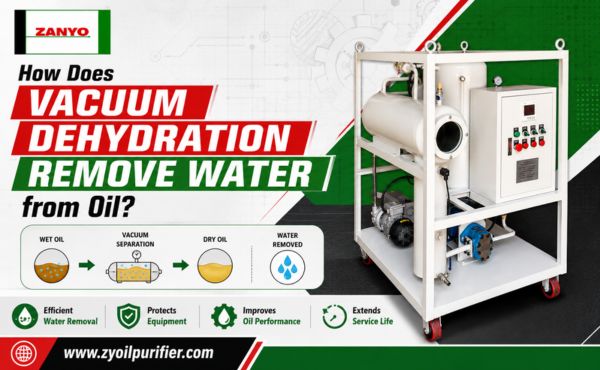
Vacuum dehydration heats oil within controlled limits and exposes it to reduced pressure. Lower pressure allows water to evaporate at temperatures below its atmospheric boiling point. Spray nozzles, distribution trays, thin films, or packing materials increase the oil surface area so water vapor and dissolved gases can leave more efficiently.
Adsorbent regeneration may be needed when oil has excessive acidity, color change, sludge precursors, or other soluble aging products. This requires assessment of the oil condition, regeneration media, inhibitor content, disposal obligations, and post-treatment testing. A standard vacuum oil purifier should not be sold as complete regeneration equipment unless it includes and validates those functions.
Calculate Flow from Volume, Passes, and Time
Start with the total oil volume to be treated, including transformer oil, temporary tanks, hoses, and processing equipment. Then establish how many complete-volume passes are expected and how many productive processing hours are available.
An initial estimate is:
Required processing rate ≈ total oil volume × planned passes ÷ available processing hours
For example, the formula helps compare broad capacity classes, but it does not guarantee the target oil condition. Required passes depend on inlet contamination, mixing inside transformers or tanks, connection arrangement, machine efficiency, temperature, sampling results, and whether treated oil immediately mixes with untreated oil.
Available hours should exclude setup, initial heating, hose flushing, sampling, filter replacement, tank switching, and shutdown. Nominal pump flow may also decrease during high vacuum, cold starts, restricted filtration, or heavy contamination. Buyers should request sustainable treatment flow under the proposed duty.
Single-Stage vs Double-Stage Vacuum Oil Purifiers
Single-stage systems generally use one primary vacuum-pump stage and can be suitable for routine dehydration, degassing, and maintenance where inlet contamination and outlet requirements are moderate.
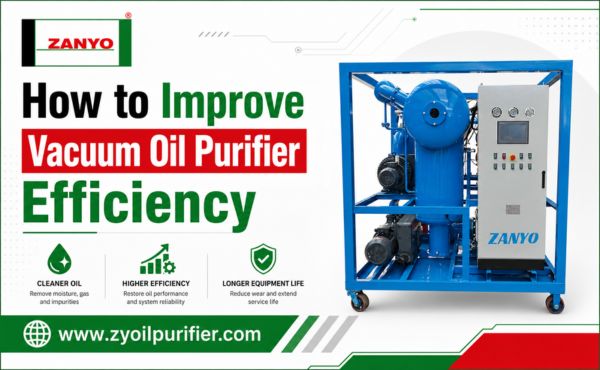
Double-stage transformer oil purifiers commonly add Roots boosters to backing pumps, and some equipment also uses additional vacuum-chamber arrangements. Higher available pumping speed and vacuum capability can support faster vapor removal or more demanding treatment. However, labels are not standardized enough to replace technical comparison.
Buyers should ask what “double-stage” means in each machine: an additional Roots booster, two vacuum chambers, two pumping stages, or a particular process layout. They should then compare operating pressure, vapor-handling capacity, rated flow under treatment, expected passes, and guaranteed results under stated inlet conditions.
Higher vacuum capability is useful only when the oil distribution system, heater, chamber, backing pump, and condensate handling can use it. Routine conditioning may not justify the extra power, control complexity, and maintenance. More demanding moisture or gas loads, strict outlet targets, short outage windows, or auxiliary transformer evacuation may support the investment.
Evaluate the Complete Oil Path
Heaters reduce viscosity and promote moisture removal, but low surface heat flux, temperature control, and no-flow interlocks are needed to avoid localized overheating. Oil should not remain stagnant against energized heaters.
Vacuum chambers must distribute oil into sufficient surface area without excessive foaming. Level controls protect against overflow and dry running. Condensate separators and traps prevent water and oil carryover from reaching vacuum pumps.
Seal, hose, gasket, coating, and wetted-material compatibility must be confirmed for the intended insulating liquid. Mineral oils, natural esters, synthetic esters, and silicone fluids can have different viscosity, moisture behavior, and material requirements. Machines used for multiple fluids also need contamination-control and flushing procedures.
Check Site and Operating Requirements
Machine capacity must fit the work site as well as the oil condition. Confirm voltage, phase, frequency, available power, ambient temperature, altitude, indoor or outdoor duty, hose distance, transformer connection size, and elevation difference. Long hoses, small ports, and cold oils can reduce sustainable flow.
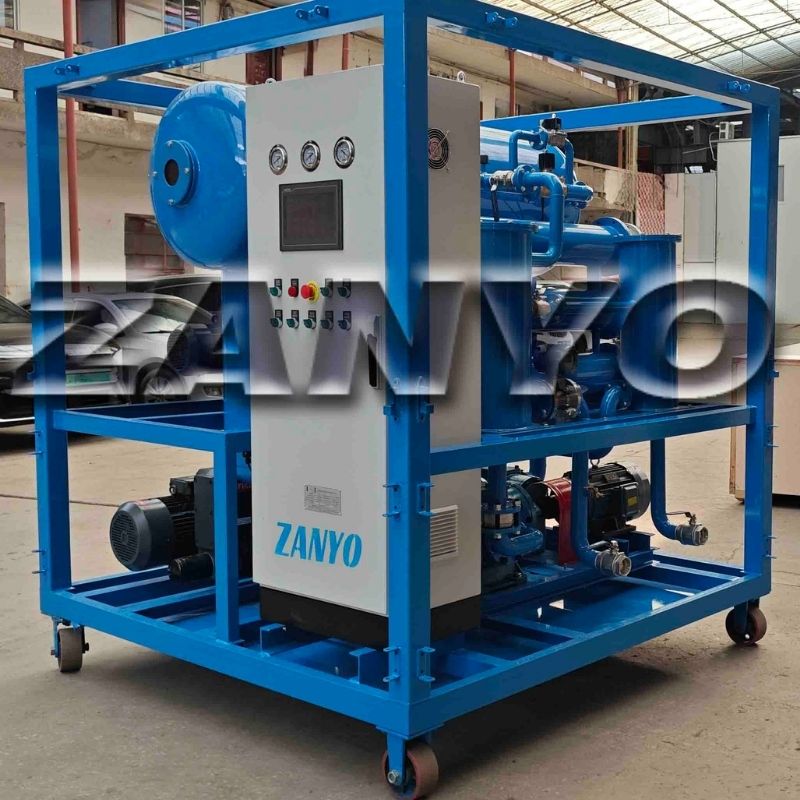
Also decide whether the machine should be stationary, caster-mounted, skid-mounted, enclosed, or trailer-mounted. Mobile service work may require lifting points, hose storage, weather protection, rapid setup, and locally available filters, seals, vacuum-pump oil, sensors, and heater parts.
Questions to Put in Supplier RFQs
Effective quotations should answer these questions:
- Which inlet condition, test method, passes, and outlet target support the performance claim?
- Is rated flow maintained during simultaneous heating, vacuum treatment, and filtration?
- What vacuum arrangement, chamber design, and oil-distribution method are used?
- How are heater surface temperature, oil flow, foaming, levels, and carryover protected?
- What filter-efficiency standard and final cleanliness basis are provided?
- Is the oil path compatible with the insulating fluid?
- Can the system evacuate transformer tanks, and what separate performance data support that function?
- Which factory tests, calibration records, manuals, spare parts, commissioning, and training are included?
Buyers should require common inlet conditions and test methods when comparing suppliers. Outlet figures without those details are not meaningful comparisons.
Use Duty Specifications Instead of Generic Comparisons
Correct transformer oil purification machines are selected through a clear sequence: diagnose the oil, define treatment targets, calculate volume and available time, select the treatment process, verify complete oil-path design, and confirm site integration and acceptance testing.
Before requesting quotations, prepare oil test results, volume, fluid type, target condition, processing time, power supply, connection details, and operating environment.