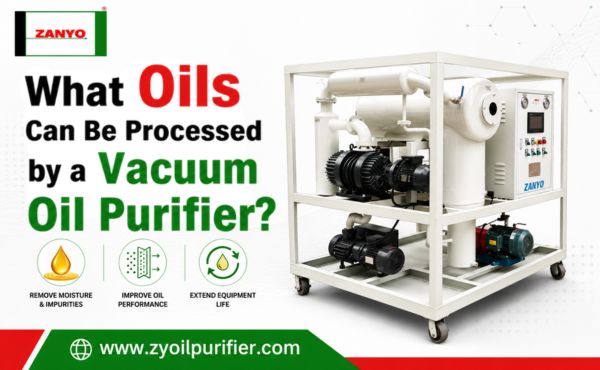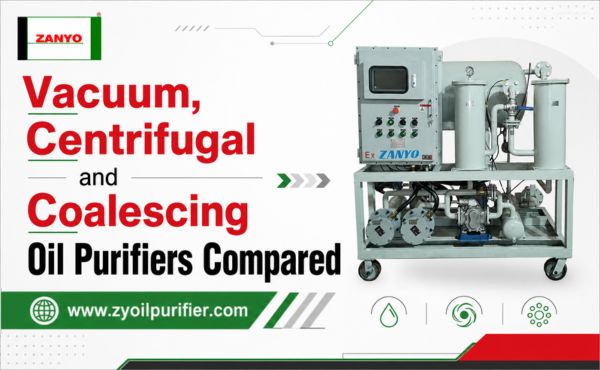
A Vacuum Oil Purifier can process various industrial oils by removing moisture, dissolved gases, and fine contaminants that reduce performance and service life. However, treatment results depend on the oil type, viscosity, contamination level, and purifier configuration. Understanding which oils are suitable helps operators choose the right equipment, improve oil quality, protect machinery, and reduce replacement costs. This article explains the main oil types compatible with vacuum purification.

How Does a Vacuum Oil Purifier Work?
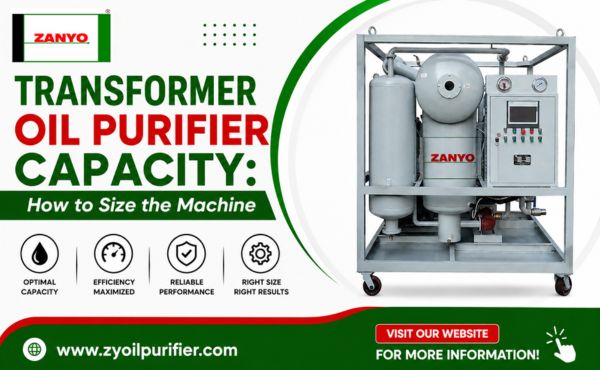
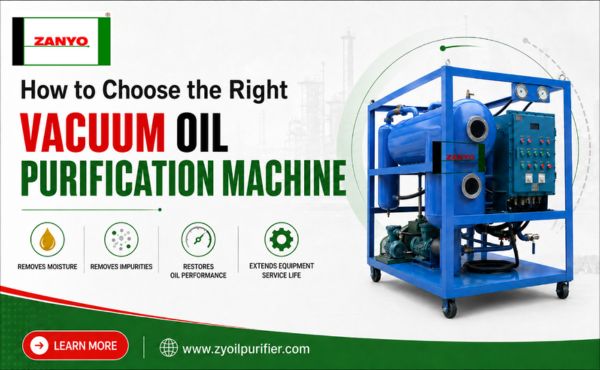
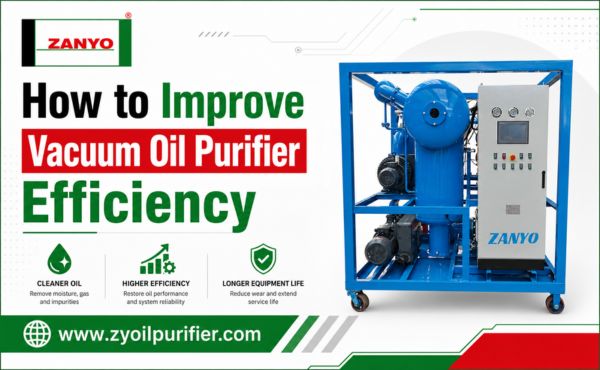
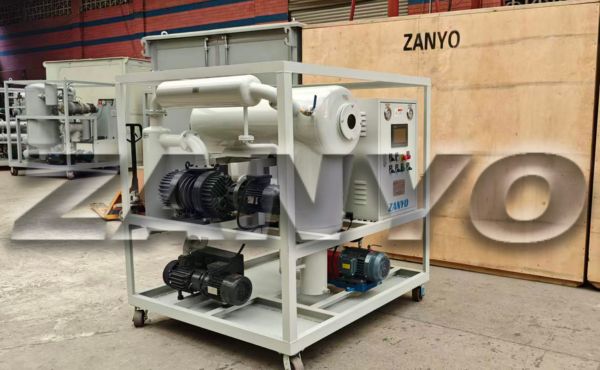
A vacuum oil purifier normally combines heating, vacuum dehydration, degassing, and multi-stage filtration.
Vacuum Dehydration and Degassing
Contaminated oil first passes through a controlled heating system. Heating reduces oil viscosity and improves the separation of water and gases.
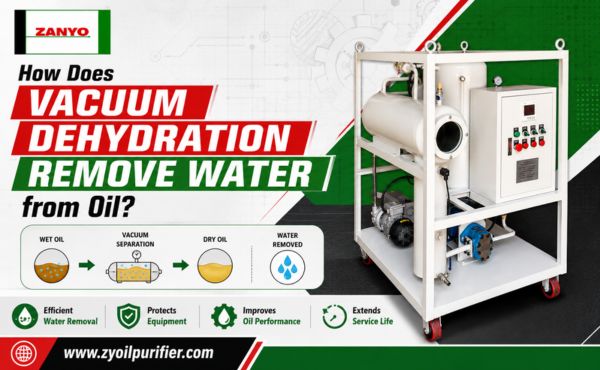
The heated oil then enters a vacuum chamber, where it is spread into a thin film or fine droplets. Under vacuum conditions, the boiling point of water is reduced, allowing free water, emulsified water, and dissolved moisture to evaporate at a relatively low temperature.
The vacuum system also removes dissolved air and other gases that may cause oxidation, cavitation, unstable pressure, or reduced electrical insulation performance.
Fine Particle Filtration
After dehydration and degassing, the oil passes through one or more filters. These filters capture dust, metal particles, carbon residue, fibers, sludge, and other solid contaminants.
The required filtration accuracy depends on the oil type and the equipment in which it is used. Transformer oil may require very fine filtration, while high-viscosity gear oil may need larger-capacity filters to maintain an acceptable flow rate.
What Oils Can Be Processed by a Vacuum Oil Purifier?
Vacuum oil purifiers are widely used for electrical insulating oils, turbine lubricants, hydraulic fluids, industrial lubricating oils, and several other petroleum-based oils.
Transformer Oil
Transformer oil is one of the most common oils processed by vacuum purification equipment.
During operation, transformer oil can absorb moisture from the atmosphere and insulation materials. It may also contain dissolved gases, carbon particles, fibers, and oxidation products.
Even a small amount of moisture can reduce the dielectric strength of transformer oil and increase the risk of insulation failure. Vacuum purification removes moisture and dissolved gases while filtering fine particles.
Transformer oil purification is commonly used for:
- Power transformers
- Distribution transformers
- Mutual inductors
- Oil-filled circuit breakers
- High-voltage electrical equipment
For critical transformer applications, the purifier should provide a high vacuum level, precise temperature control, and fine filtration.
Turbine Oil
Turbine oil is used to lubricate bearings, gears, control systems, and other components in steam, gas, and hydroelectric turbines.
Water contamination is a common problem in turbine lubrication systems. It may result from steam leakage, condensation, cooling system failure, or improper storage.
Moisture can cause oil emulsification, corrosion, additive degradation, and unstable lubrication. Vacuum turbine oil purification removes free, emulsified, and dissolved water while also reducing gas and particle contamination.
This treatment is suitable for oils used in:
- Steam turbines
- Gas turbines
- Hydroelectric turbines
- Generator lubrication systems
- Power plant oil circulation systems
Regular purification can help extend oil service life and reduce the risk of bearing and control-system damage.
Hydraulic Oil
Hydraulic oil can also be processed by a vacuum oil purifier.
Hydraulic systems are sensitive to water, air, and fine particles. These contaminants can lead to pump wear, valve blockage, corrosion, cavitation, unstable pressure, and reduced system efficiency.
Vacuum purification is particularly useful for hydraulic oils contaminated by moisture from humid operating environments, leaking heat exchangers, outdoor storage, or condensation.
Common applications include:
- Construction machinery
- Manufacturing equipment
- Hydraulic presses
- Injection molding machines
- Mining machinery
- Steel production equipment
The purifier must be selected according to the hydraulic oil viscosity and cleanliness requirement. High-viscosity hydraulic fluids may require stronger heating and a lower processing flow rate.
Lubricating and Gear Oil
Many industrial lubricating oils can be treated by vacuum oil purification, including bearing oil, circulation oil, machine lubricating oil, and some gear oils.
Lubricating oils form a protective film between moving components. When the oil contains water or abrasive particles, this film becomes weaker, increasing friction and mechanical wear.
Vacuum purification helps remove these contaminants and can restore oil cleanliness and improve lubrication reliability.
Gear oil can also be processed, but its high viscosity creates additional challenges. At low temperatures, thick gear oil flows slowly and may overload the pump or block filters.
A purifier used for gear oil should have:
- Controlled heating
- A suitable high-viscosity pump
- Large-capacity filters
- Adjustable flow control
- Temperature protection
Purification is most effective when the oil is contaminated but has not experienced severe oxidation or additive depletion.
Compressor Oil
Compressor oil may become contaminated with condensed water, air, dust, metal particles, and oxidation products.
Water contamination can cause rust, poor lubrication, foaming, and unstable compressor operation. Oxidation products may also form deposits and increase oil viscosity.
A vacuum oil purifier can remove moisture, dissolved gases, and particles from many types of compressor oil, including oils used in:
- Screw compressors
- Centrifugal compressors
- Reciprocating compressors
- Industrial air compressors
The oil manufacturer’s recommendations should be checked before purification, especially when synthetic compressor oils or special additive packages are involved.
Quenching and Rolling Oil
Quenching oil used in heat treatment can collect metal scale, carbon residue, water, and other contaminants. These impurities may affect cooling performance and cause uneven hardness, surface marks, or other product defects.
Vacuum purification can remove water and particles from suitable quenching oils, helping maintain more consistent heat-treatment performance.
Rolling oils used in metal processing may also be purified when they are petroleum-based and compatible with vacuum treatment. However, some rolling oils contain emulsifiers or are designed to mix with water. These products may require specialized separation equipment rather than a standard vacuum oil purifier.
Diesel and Light Fuel Oil
Some vacuum purification systems are designed to process diesel fuel and light fuel oil. They can remove water, sediment, and fine particles introduced during transportation, storage, or tank condensation.
However, fuel purification requires specially designed equipment. The purifier must use compatible seals, pumps, electrical components, and safety systems.
A standard lubricating oil purifier should not automatically be used for combustible fuels. Explosion-proof electrical components and appropriate safety protection may be required, depending on the fuel and operating environment.
Which Oils Require Special Attention?
Although vacuum purification is suitable for many oils, certain fluids require careful evaluation before treatment.
High-Viscosity Oils
High-viscosity oils, such as heavy gear oil and some industrial lubricants, require additional heating to improve flow and water separation.
Excessive heating must be avoided because it may accelerate oxidation or damage additives. The purifier should therefore provide accurate temperature control and sufficient heating surface area.
Heavily Emulsified Oils
Vacuum dehydration can remove emulsified water, but stable emulsions may require repeated processing or additional separation technology.
Oils containing strong emulsifiers may not release water easily. In these cases, a vacuum purifier may need to be combined with coalescence separation, centrifugation, or chemical treatment.
Oils with Sensitive Additives
Industrial oils contain additives that provide anti-wear, anti-oxidation, anti-foaming, corrosion protection, or extreme-pressure performance.
Improper temperature or excessive vacuum may affect volatile components or sensitive additives. Before processing an unfamiliar oil, users should check the oil specification and purifier operating conditions.
Severely Oxidized or Degraded Oils
A vacuum oil purifier removes water, gases, and solid contaminants, but it cannot completely restore oil that has experienced severe chemical degradation.
Oil replacement may be more appropriate when the oil has:
- Excessively high acid value
- Severe discoloration or burnt odor
- Significant sludge formation
- Major viscosity change
- Depleted additive content
- Extensive oxidation
Laboratory testing should be conducted when the oil condition is uncertain.
Factors Affecting Oil Purification Results
Oil Viscosity and Operating Temperature
Lower-viscosity oils normally circulate and release moisture more easily than high-viscosity oils. Controlled heating improves flow and dehydration efficiency.
The correct temperature depends on the oil type. Excessive temperature may damage oil quality, while insufficient heating may reduce purification performance.
Water Content and Contamination Level
The amount and form of water affect the required processing time.
Free water is generally easier to separate. Emulsified and dissolved water usually require vacuum dehydration and multiple circulation cycles.
Heavy particle contamination may also require pre-filtration to protect the pump and fine filters.
Vacuum Level and Filtration Accuracy
A deeper vacuum generally improves dehydration and degassing, particularly for transformer oil and other oils requiring very low moisture levels.
Filtration accuracy should match the equipment requirement. Selecting a filter that is too coarse may leave harmful particles in the oil, while an unnecessarily fine filter may reduce flow and increase replacement costs.
Oil Condition and Remaining Service Life
Purification is most economical when the oil still has acceptable chemical properties.
Before treatment, users may test:
- Moisture content
- Particle cleanliness
- Viscosity
- Acid value
- Flash point
- Dielectric strength
- Dissolved gas content
These results help determine whether purification, regeneration, or complete oil replacement is the best option.
How to Choose the Right Vacuum Oil Purifier
Match the Machine to the Oil Type
Different oils require different machine configurations. Transformer oil purifiers emphasize high vacuum, fine filtration, and dielectric performance. Turbine oil purifiers focus on water and emulsion removal. Lubricating and gear oil purifiers require stronger heating and high-viscosity handling.
The equipment supplier should be informed of the exact oil type before manufacturing or configuring the machine.
Check Flow Rate and Heating Capacity
The required flow rate depends on the oil volume, contamination level, and available processing time.
A larger flow rate is not always better. If oil passes through the vacuum chamber too quickly, dehydration efficiency may decrease.
Heating capacity must also match oil viscosity and environmental temperature.
Confirm Seal and Material Compatibility
Pumps, seals, hoses, filters, and tanks must be compatible with the oil being processed.
This is especially important for synthetic oils, fuels, fire-resistant hydraulic fluids, and oils containing special chemical additives.
Conclusion
Vacuum oil purifiers can process transformer oil, turbine oil, hydraulic oil, lubricating oil, gear oil, compressor oil, quenching oil, rolling oil, and certain light fuels. Their main functions are removing water, dissolved gases, and solid particles.
However, purification results depend on oil viscosity, additive composition, contamination level, and chemical condition. Before selecting equipment, industrial users should provide the oil type, viscosity, oil volume, water content, required cleanliness, and operating conditions. Matching the purifier to the oil ensures safer operation, better purification performance, and a longer oil service life.
Frequently Asked Questions
Can One Vacuum Oil Purifier Process Different Oils?
Yes, some machines can process several compatible oils. However, cross-contamination must be prevented, and the machine should be thoroughly cleaned before switching oil types.
Can It Remove Free, Emulsified, and Dissolved Water?
A properly designed vacuum oil purifier can remove all three forms of water. The final moisture level depends on the machine design, oil condition, temperature, vacuum level, and number of circulation cycles.
Can High-Viscosity Oil Be Purified?
Yes, but the machine requires suitable heating, pumping, and flow-control systems. Processing high-viscosity oil usually takes longer than processing transformer or turbine oil.
When Should Contaminated Oil Be Replaced?
Oil should be replaced when it is severely oxidized, chemically degraded, contaminated with incompatible substances, or unable to meet operating specifications after purification.