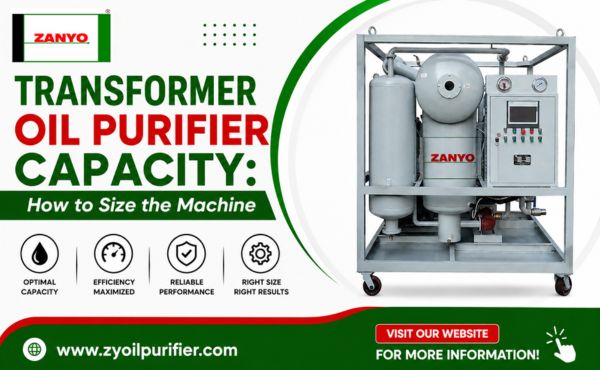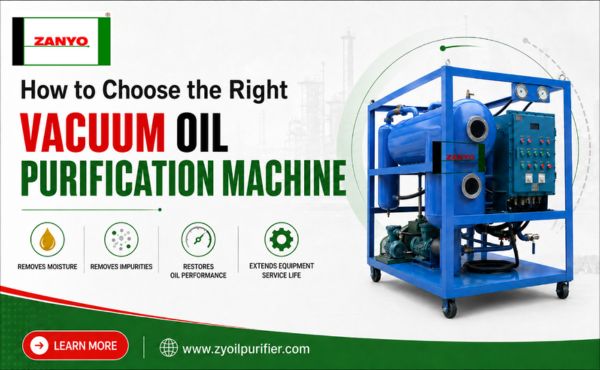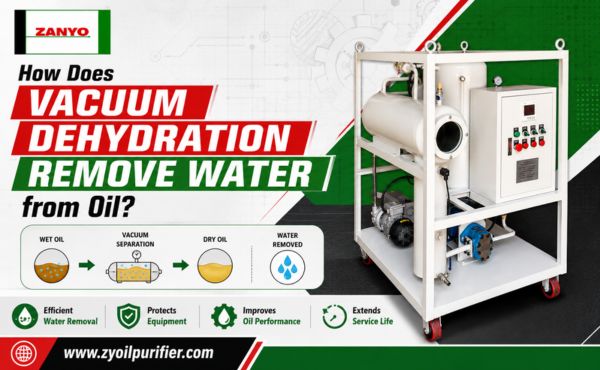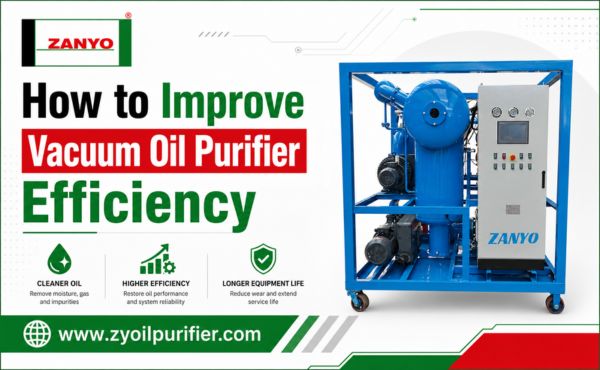
Choosing the right vacuum oil purification machine is important for maintaining oil quality, improving equipment reliability, and reducing unnecessary oil replacement costs. However, different oils and operating conditions require different purification configurations. A machine suitable for transformer oil may not be the best option for hydraulic oil, turbine oil, or heavily aged insulating oil.
The correct choice depends on several factors, including the type of oil, contamination level, required treatment results, processing capacity, filtration accuracy, vacuum performance, and working environment. Instead of selecting equipment based only on flow rate or price, buyers should evaluate how well the machine matches their actual purification requirements.
1. Identify the Type of Oil You Need to Purify
The first step is to determine what type of oil will be treated. Different oils have different physical properties and cleanliness requirements.
Common applications of vacuum oil purification equipment include:
- Transformer oil
- Turbine oil
- Hydraulic oil
- Lubricating oil
Transformer oil, for example, is highly sensitive to moisture and dissolved gases because contamination can reduce dielectric strength. Turbine and hydraulic oils may require stronger particle removal and water separation depending on the operating environment.
Oil viscosity also affects purification efficiency. Higher-viscosity oils may require more heating or different pump configurations to maintain stable circulation through the system.
Therefore, the oil type should always be confirmed before choosing the machine configuration.
2. Determine What Contaminants Need to Be Removed
A vacuum oil purification machine can remove several types of contaminants, but different systems are designed for different treatment requirements.
Water
Water contamination can exist as free water, emulsified water, or dissolved moisture.
Free water is relatively easy to separate, while dissolved water is much more difficult to remove. High-efficiency vacuum dehydration is particularly important when very low moisture levels are required.
For insulating oil applications, moisture removal is especially critical because even small amounts of water can affect electrical insulation performance.
Dissolved Gases and Air
Oil can absorb air and other gases during operation, maintenance, storage, or exposure to the atmosphere.
A properly designed vacuum degassing system lowers pressure inside the vacuum chamber, allowing dissolved gases to separate from the oil and be removed by the vacuum pump.
Solid Particles
Dust, metal particles, carbon residues, fibers, and other suspended contaminants can increase equipment wear and reduce oil cleanliness.
Multi-stage filtration is normally used to remove particles of different sizes.
Acids, Sludge, and Oxidation Products
Vacuum dehydration and filtration alone cannot fully restore severely aged oil.
If the oil contains high acidity, sludge, discoloration, or oxidation products, a machine equipped with an additional oil regeneration or adsorption system may be required.
3. Define the Required Oil Quality After Purification
One of the most important selection criteria is the condition the oil must reach after treatment.
Depending on the application, buyers may need to consider:
- Final moisture content
- Gas content
- Particle cleanliness
- Filtration accuracy
- Breakdown voltage
- Acidity
- Oil color
- Oxidation condition
For transformer oil, for example, the objective may be to reduce moisture and gas content while improving dielectric strength. For hydraulic oil, particle cleanliness and water removal may be the main priorities.
A supplier should be able to explain what treatment results the equipment can realistically achieve under specified operating conditions.
Selecting equipment according to the required outlet oil quality is more reliable than comparing machines only by rated flow capacity.
4. Choose the Appropriate Processing Capacity
Processing capacity is usually expressed in L/min, L/h, or m³/h.
The appropriate capacity depends on:
- Total oil volume
- Required treatment time
- Frequency of purification
- Number of treatment cycles
- Continuous or periodic operation
For example, a small maintenance project may only require a compact purifier, while a large transformer, power station, or industrial oil system may require a much higher flow rate.
However, larger capacity does not automatically mean better purification.
The oil must remain in the vacuum treatment section long enough for moisture and gases to separate effectively. If the flow rate is too high relative to the vacuum chamber design, treatment efficiency may decrease.
Capacity should therefore be matched to both oil volume and the required purification performance.
5. Evaluate Vacuum Dehydration and Degassing Performance
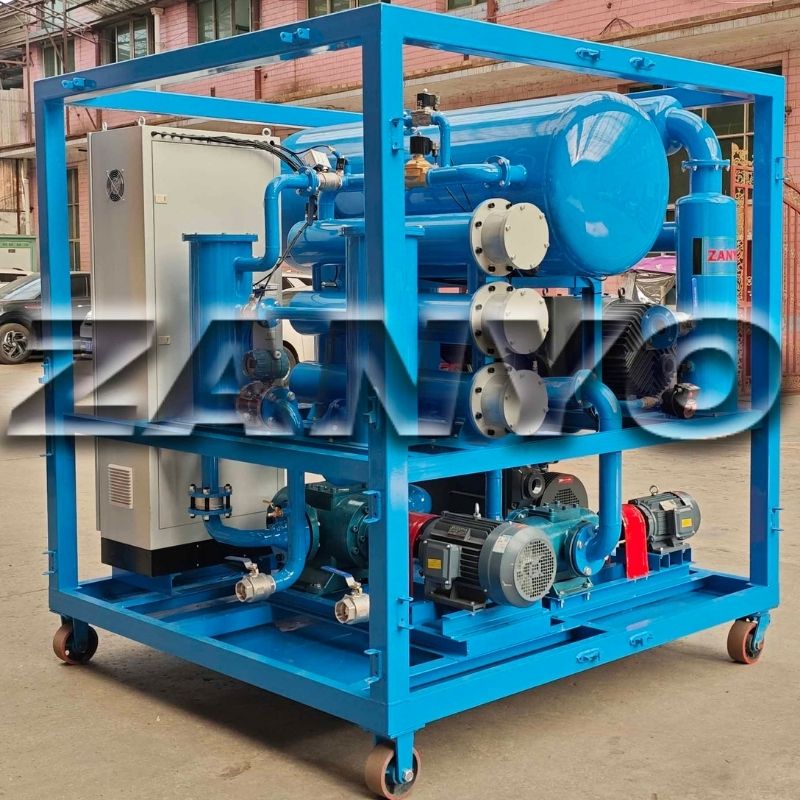
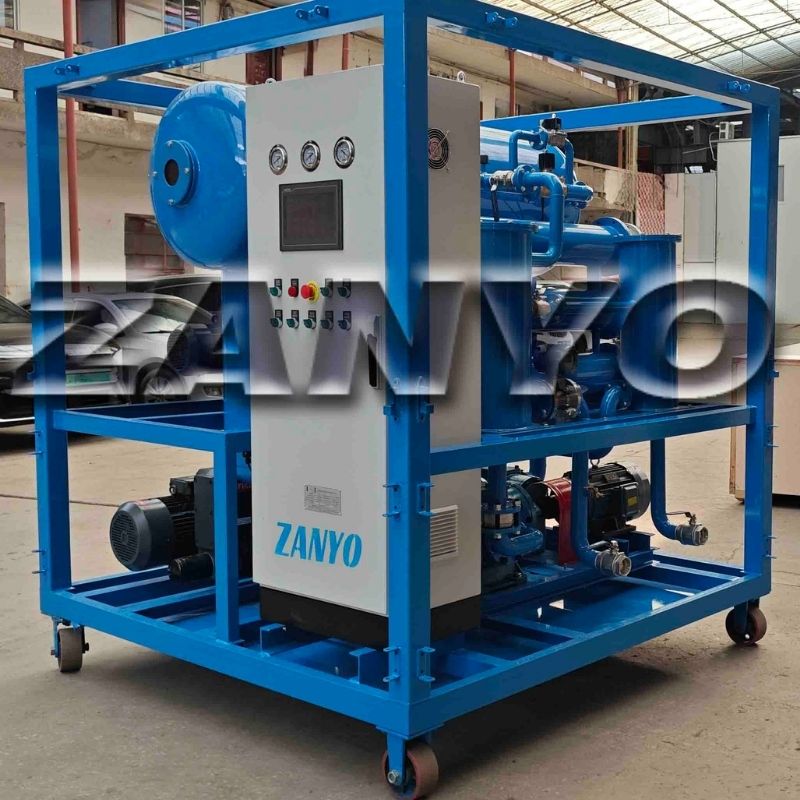
The vacuum system is the core of a vacuum oil purifier.
Important factors include:
- Vacuum level
- Vacuum pump capacity
- Vacuum chamber design
- Oil dispersion method
- Oil residence time
- Heating temperature
Inside the vacuum chamber, oil is often dispersed into thin films, droplets, or other high-surface-area forms. This increases contact with the vacuum environment and helps moisture and dissolved gases escape more efficiently.
A stable vacuum level is essential for consistent dehydration and degassing.
For applications requiring deep purification, buyers should evaluate actual treatment performance rather than relying only on the rated vacuum value of the pump.
6. Check the Filtration System and Filtration Accuracy
Most vacuum oil purification machines use multi-stage filtration.
A typical configuration may include:
Coarse filtration → intermediate filtration → fine filtration
Coarse filters protect pumps and downstream components by removing larger contaminants. Fine filters remove smaller particles before the purified oil returns to the equipment or storage tank.
Key specifications to evaluate include:
- Final filtration precision
- Filter element material
- Dirt-holding capacity
- Differential pressure monitoring
- Filter replacement frequency
- Availability of replacement elements
The finest filter is not always the best choice. Excessively fine filtration can increase pressure drop, reduce flow, and increase replacement costs.
Filtration accuracy should match the cleanliness requirement of the application.
7. Evaluate the Heating System
Heating is commonly used to improve vacuum dehydration.
Moderate heating reduces oil viscosity and helps dissolved moisture evaporate more easily under vacuum.
When evaluating the heating system, check:
- Adjustable temperature control
- Uniform heating
- Heating power
- Over-temperature protection
- Low surface heating load
Temperature control is particularly important for insulating oils. Excessive or uneven heating can accelerate oxidation and negatively affect oil quality.
A good system should heat the oil efficiently without exposing it to unnecessary thermal stress.
8. Decide Between Online and Offline Purification
Vacuum oil purification systems may be used for either online or offline treatment.
Offline Purification
Offline purification is normally performed when oil is removed from equipment or when the equipment is shut down for maintenance.
This method is suitable for scheduled servicing, oil transfer, storage tank treatment, and workshop purification.
Online Purification
Online purification allows oil to circulate continuously through the purifier while the connected equipment remains in operation, where operating procedures and equipment design permit.
This approach can be useful for systems requiring continuous moisture, gas, or particle control.
The choice should be based on maintenance strategy, equipment design, operating conditions, and safety requirements.
9. Consider Operating Conditions and Machine Configuration
The working environment can significantly affect machine selection.
Important site conditions include:
- Indoor or outdoor use
- Ambient temperature
- Altitude
- Power supply voltage
- Power frequency
- Available installation space
- Mobility requirements
Machines can be configured as stationary, skid-mounted, trailer-mounted, or enclosed units.
Outdoor projects may require weatherproof enclosures, while some industrial environments may require explosion-proof electrical components.
Buyers should provide accurate site information before equipment configuration is finalized.
10. Check Automation and Safety Protection
Automation can improve operating consistency while reducing manual intervention.
Useful features may include:
- Automatic temperature control
- Automatic oil level control
- Vacuum monitoring
- Pressure monitoring
- Filter blockage alarms
- Oil leakage protection
- Phase-sequence protection
- Automatic shutdown protection
These functions help protect both the machine and the oil being treated.
For continuous or unattended operation, reliable monitoring and automatic protection become even more important.
11. Consider Operating and Maintenance Costs
Purchase price is only one part of the total cost of a vacuum oil purification machine.
Long-term costs may include:
- Electricity consumption
- Heater power
- Vacuum pump maintenance
- Filter replacement
- Consumables
- Spare parts
- Labor
- Oil loss during treatment
A lower-priced machine may become more expensive over time if it requires frequent filter replacement, consumes excessive energy, or has poor component reliability.
Evaluating total lifecycle cost gives a more accurate picture of equipment value.
12. Evaluate Manufacturer Customization and Technical Support
Industrial purification projects often require more than a standard machine.
A reliable oil purifier manufacturer should be able to provide options such as:
- Customized processing capacity
- Different voltage and frequency configurations
- Specific filtration accuracy
- Oil regeneration systems
- Trailer-mounted designs
- Enclosed structures
- Special control systems
- Spare parts and consumables
- Installation guidance
- Technical support
Clear communication about oil conditions and required treatment results helps the manufacturer configure a machine that better matches the application.
Conclusion
Choosing the right vacuum oil purification machine requires more than comparing flow rates and prices. The equipment should match the oil type, contamination condition, target oil quality, processing volume, vacuum performance, filtration requirements, and actual operating environment.
By evaluating these factors before purchasing, users can select a purification system that removes moisture, dissolved gases, and particles more effectively while improving oil condition, reducing maintenance costs, and supporting reliable equipment operation.