Water contamination is one of the most common problems affecting industrial oils. Even a small amount of moisture can reduce lubrication performance, accelerate oxidation, promote corrosion, and shorten the service life of hydraulic systems, transformers, turbines, and other critical equipment.
Traditional filtration methods can remove solid particles from oil, but they are usually unable to effectively eliminate dissolved and emulsified water. This is where vacuum dehydration technology provides an efficient solution. By using a controlled vacuum environment, vacuum dehydration lowers the boiling point of water and removes moisture from oil without damaging the oil’s basic properties.
Understanding how vacuum dehydration works helps equipment operators choose the right oil purification method and maintain reliable system performance.
What Is Vacuum Dehydration?
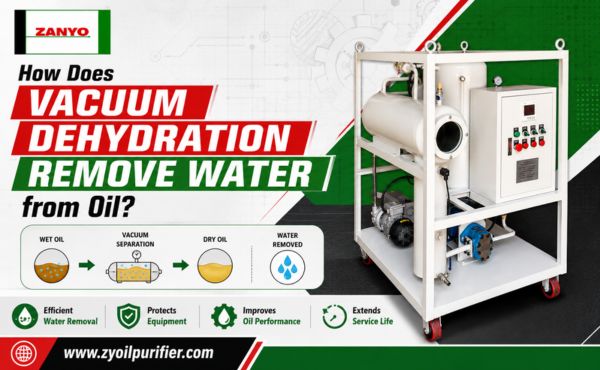
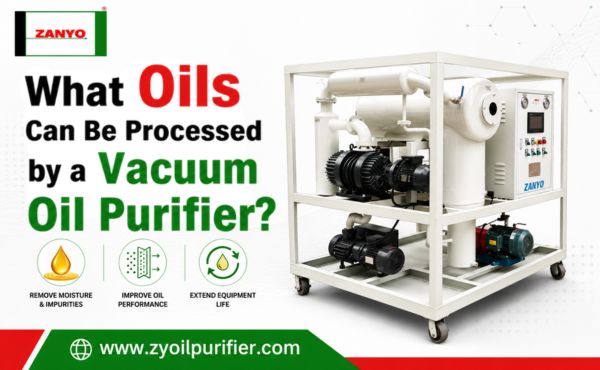
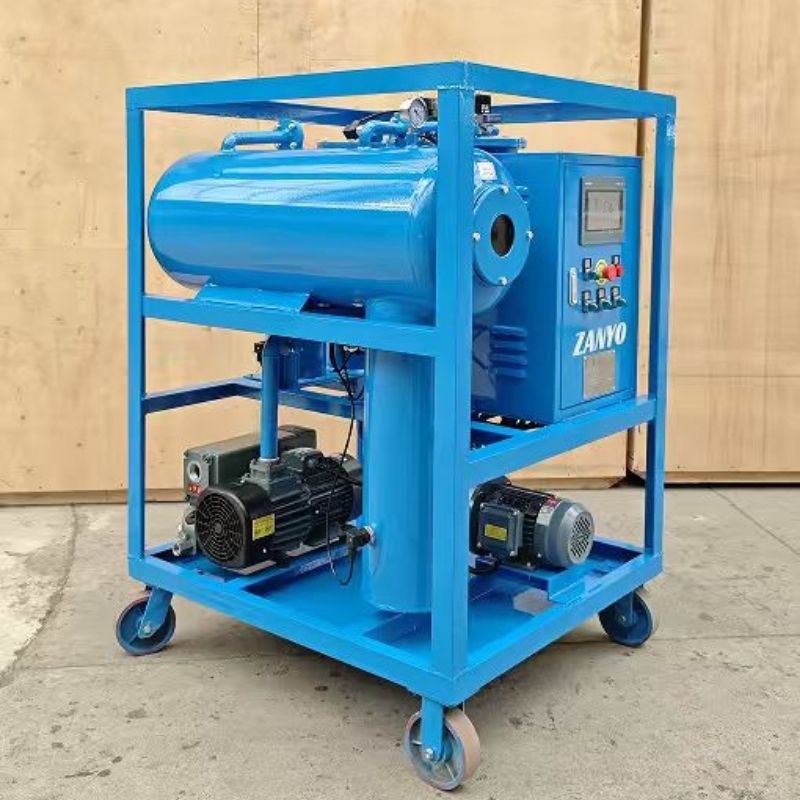
Vacuum dehydration is an oil purification process that removes water contamination by using vacuum evaporation technology. The system heats contaminated oil and exposes it to a low-pressure environment, allowing water to vaporize at a much lower temperature than under normal atmospheric conditions.
The basic principle is simple:
- Lower pressure reduces the boiling point of water
- Heated oil releases moisture in the form of water vapor
- A vacuum system removes the vapor from the treatment chamber
- Clean and dry oil is returned to the equipment
Unlike standard filters that only capture solid particles, vacuum dehydration can remove different forms of moisture, including free water, emulsified water, and dissolved water.
How Does Vacuum Dehydration Remove Water from Oil?
Vacuum dehydration removes water through a combination of heating, vacuum treatment, evaporation, and separation. The entire process typically includes several stages.
Oil Heating and Preparation
The first step is preparing the contaminated oil for dehydration. The oil enters the purification system and passes through a heating section where its temperature is carefully controlled.
Heating improves the efficiency of water removal because higher temperatures increase the movement of water molecules and help moisture separate from the oil.
However, the temperature must remain within a suitable range. Excessive heating may accelerate oil oxidation or affect sensitive additives. Professional vacuum dehydration systems use precise temperature control to maintain oil quality during treatment.
Creating a Vacuum Environment
After heating, the oil enters the vacuum chamber where pressure is significantly reduced.
Under normal atmospheric pressure, water requires a high temperature to boil. However, when pressure decreases, the boiling point of water also decreases. This allows moisture to evaporate from oil at much lower temperatures.
For example, water trapped inside oil can be removed without exposing the oil to extreme heat that may damage its chemical structure.
The vacuum environment creates the ideal conditions for separating water from oil efficiently.
Water Evaporation and Separation
Inside the vacuum chamber, contaminated oil is usually dispersed into thin layers or fine droplets to increase the contact area between oil and the vacuum environment.
This improves moisture evaporation because more oil surface is exposed to the low-pressure condition.
During this stage:
- Free water separates quickly from oil
- Emulsified water breaks down and evaporates
- Dissolved water is released from the oil molecules
The moisture changes from liquid water into water vapor, which is then continuously removed by the vacuum system.
Removing Water Vapor and Returning Dry Oil
After water evaporates, the generated water vapor is separated from the oil and discharged from the purification system.
The treated oil, with significantly reduced moisture content, is then cooled and returned to the equipment or storage tank.
Through continuous circulation, vacuum dehydration systems can gradually reduce moisture levels and restore oil performance.
What Types of Water Can Vacuum Dehydration Remove?
Free Water
Free water exists as visible droplets or separated water layers inside oil.
It is the easiest type of moisture to remove because it is not strongly bonded with oil molecules. Vacuum dehydration can quickly evaporate and separate free water from contaminated oil.
Emulsified Water
Emulsified water consists of tiny water droplets suspended throughout the oil.
Because these droplets are mixed with oil, gravity separation alone is often ineffective. Vacuum dehydration helps break the emulsion by reducing pressure and allowing water to vaporize.
Dissolved Water
Dissolved water refers to moisture molecules absorbed within the oil structure.
This type of contamination is difficult to detect and remove using conventional methods. Vacuum dehydration is particularly effective because it changes the balance between oil and water molecules, allowing dissolved moisture to be released and evaporated.
Factors Affecting Vacuum Dehydration Efficiency
The performance of a vacuum dehydration system depends on several operating conditions.
Vacuum Level
The vacuum level directly affects water evaporation efficiency. A stronger vacuum lowers the boiling point of water further, improving moisture removal capability.
Operating Temperature
Proper heating accelerates evaporation and improves dehydration efficiency. However, temperature control is important to prevent oil degradation.
Oil Flow Rate
The flow rate determines how long oil remains inside the dehydration chamber. A suitable residence time allows sufficient moisture separation.
Initial Water Content
Oil with higher moisture contamination may require longer processing time or multiple circulation cycles to reach the desired dryness level.
Benefits of Removing Water from Oil with Vacuum Dehydration
Using vacuum dehydration for oil moisture removal provides several advantages:
Extends Oil Service Life
Water accelerates oil oxidation and additive breakdown. Removing moisture helps maintain oil performance for a longer period.
Reduces Corrosion Risk
Moisture can react with metal surfaces and cause rust or corrosion. Effective dehydration protects internal equipment components.
Improves Lubrication Performance
Dry oil maintains better viscosity stability and reduces wear caused by poor lubrication conditions.
Reduces Oil Replacement Costs
Instead of frequently replacing contaminated oil, vacuum dehydration allows oil to be regenerated and reused, reducing maintenance expenses.
Protects Sensitive Equipment
Removing moisture helps improve reliability in transformers, hydraulic systems, turbines, and other high-value machinery.
Applications of Vacuum Dehydration Oil Purification
Vacuum dehydration is widely used in industries where oil cleanliness and moisture control are critical.
Transformer Oil Treatment
Transformer oil requires low moisture levels to maintain insulation performance and prevent electrical failures. Vacuum dehydration helps remove water contamination and improve dielectric properties.
Hydraulic Oil Purification
Hydraulic systems are sensitive to moisture because water can damage pumps, valves, and other precision components. Vacuum dehydration helps maintain hydraulic system reliability.
Turbine Oil Maintenance
Steam turbines and power generation equipment often experience moisture contamination. Vacuum dehydration helps maintain turbine oil quality and extend operating life.
Industrial Lubrication Systems
Manufacturing equipment, gear systems, and heavy machinery benefit from moisture removal to reduce wear and improve operational stability.
BUY OIL PURIFICATION MACHINE HERE
Vacuum Dehydration vs Other Oil Water Removal Methods
Vacuum Dehydration vs Centrifugal Separation
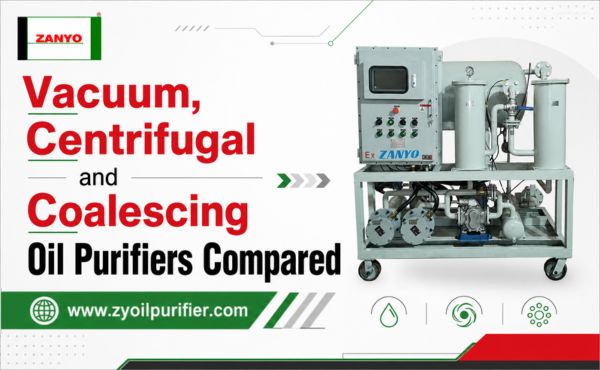
Centrifugal separation mainly relies on density differences to separate water from oil. It works well for larger water droplets but is less effective for dissolved moisture.
Vacuum dehydration can remove smaller amounts of moisture, including dissolved water.
Vacuum Dehydration vs Coalescing Filtration
Coalescing filters combine small water droplets into larger droplets for separation. However, they are generally less effective for removing dissolved water.
Vacuum dehydration removes moisture through evaporation, making it suitable for deeper dehydration requirements.
Vacuum Dehydration vs Traditional Heating
Simple heating can help evaporate water, but without a vacuum environment, much higher temperatures are required.
Vacuum dehydration achieves moisture removal at lower temperatures, helping protect oil quality and additives.
Conclusion
Vacuum dehydration removes water from oil by using a controlled vacuum environment to lower the boiling point of moisture. Through heating, vacuum evaporation, and vapor separation, it can effectively eliminate free water, emulsified water, and dissolved water from contaminated oil.
Compared with traditional filtration or separation methods, vacuum dehydration provides a more complete solution for moisture control while preserving oil properties. For transformer oil, hydraulic oil, turbine oil, and industrial lubrication systems, vacuum dehydration is an effective method to improve oil reliability, extend equipment life, and reduce maintenance costs.
FAQ
What temperature does vacuum dehydration use to remove water?
Vacuum dehydration heats oil to temperatures between 120 and 140 degrees Fahrenheit. Lowering the vessel pressure allows trapped water to boil within this safe thermal range. This process removes moisture quickly without causing thermal damage to base oil molecules or protective chemical additives.
Can a vacuum dehydrator remove dissolved water from oil?
Yes. Vacuum dehydrators excel at extracting dissolved water molecules bound directly to oil hydrocarbons. Reducing internal chamber pressure forces bound moisture to break away from fluid molecules rapidly. Centrifuges and coalescing filters cannot achieve this deep level of moisture removal.
How does vacuum dehydration compare to coalescing filters?
Coalescing filters struggle with surfactant additives, high fluid viscosity, and dissolved water. Vacuum dehydrators process heavy synthetic oils easily without blinding filter elements. They remove free, emulsified, and dissolved moisture efficiently regardless of underlying fluid chemistry barriers.
Why is water contamination harmful to industrial oil?
Moisture accelerates fluid oxidation, breaks down protective chemical additives, and creates harmful sludge deposits. Water also reduces fluid film strength, causing direct metal-to-metal contact and mechanical wear. Unaddressed moisture leads to component corrosion, pump cavitation, and sudden machinery failure.