Vacuum, centrifugal and coalescing oil purifiers use different separation methods to remove water, particles and other contaminants from industrial oils. Understanding how these technologies compare helps buyers choose the right system for their oil type, contamination level, processing capacity and maintenance needs. This article explains their working principles, key advantages, limitations and suitable applications to support a more informed equipment selection.
What Are the Three Main Oil Purification Methods?
The three purification methods use different physical principles.
Vacuum purification uses heat, vacuum pressure and mass transfer to separate moisture and gases from oil. It can treat free, emulsified and dissolved water, making it suitable for severely contaminated or moisture-sensitive oils.
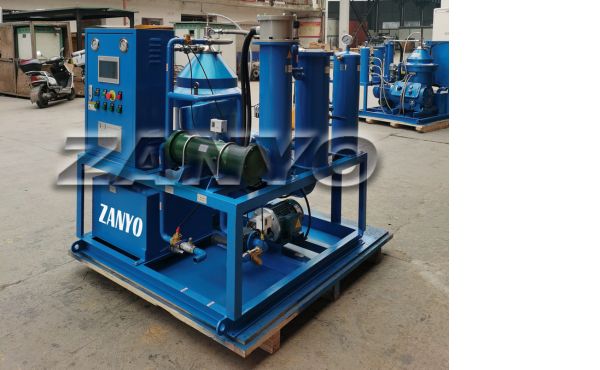
Centrifugal purification uses high-speed rotation to generate centrifugal force. Because oil, water and solid particles have different densities, they move to different positions inside the rotating bowl and can be discharged separately.
Coalescing purification uses specially designed filter elements to capture small water droplets and combine them into larger droplets. The enlarged water droplets then settle or move into a separation chamber.
The correct technology depends on what must be removed. No single purification method is automatically the best choice for every oil system.
How Does a Vacuum Oil Purifier Work?
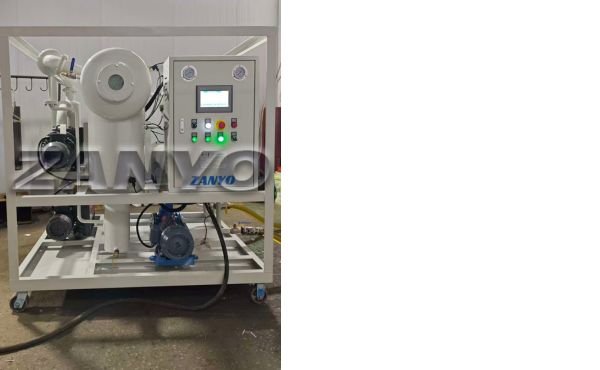
A vacuum oil purifier generally combines oil heating, vacuum dehydration and fine filtration. Contaminated oil first passes through a heater, which reduces viscosity and makes water easier to separate.
The heated oil is then dispersed inside a vacuum chamber. Under reduced pressure, the boiling point of water decreases. Free, emulsified and dissolved moisture evaporates at a temperature that is normally safe for the oil. The generated water vapour and gases are removed by the vacuum system.
After dehydration and degassing, the oil usually passes through one or more filters to remove particles. Vacuum purification systems can therefore provide multi-stage treatment for water, gas and solid contamination.
Commercial vacuum dehydration systems are designed to reduce moisture below the oil’s saturation point and can also remove free, entrained and part of the dissolved gases. Their actual performance depends on oil viscosity, temperature, initial moisture level and processing conditions.
Best Contaminants to Remove
Vacuum oil purifiers are suitable for removing:
- Free water
- Emulsified water
- Dissolved water
- Free and entrained air
- Dissolved gases
- Fine particles when combined with filters
- Some volatile contaminants
This broad treatment capability makes vacuum purification particularly valuable when the oil contains several forms of contamination.
Main Advantages and Limitations
The main advantage of vacuum purification is its ability to remove dissolved moisture. Free-water separation equipment, such as basic coalescers and centrifuges, generally removes water only until the oil approaches its saturation level. Vacuum dehydration can continue reducing the moisture content below that point.
Vacuum systems can also combine dehydration, degassing and fine particle filtration in one machine. This makes them suitable for oils requiring a high level of restoration.
However, vacuum oil purifiers are generally more complex than coalescing units. They may include heaters, vacuum pumps, sensors, condensers and control systems. The initial equipment cost, energy consumption and maintenance requirements can therefore be higher.
Oil temperature must also be controlled carefully. Excessive heating may accelerate oil degradation, while insufficient heating can reduce dehydration efficiency.
How Does a Centrifugal Oil Purifier Work?
A centrifugal oil purifier uses a rapidly rotating bowl or disc stack to generate centrifugal force. Contaminated oil enters the separator, where components with different densities are forced into separate layers.
Heavier solid particles move toward the outside of the bowl. Water, which is normally denser than oil, also moves outward and can be discharged through a separate outlet. The cleaned oil remains closer to the centre and leaves through another passage.
High-speed centrifugal separation can accelerate the natural gravity-separation process by thousands of times, allowing the equipment to process oil continuously and efficiently.
Centrifugal purifiers may operate as clarifiers or purifiers. A clarifier primarily removes solids, while a purifier separates both water and solids from oil.
Best Contaminants to Remove
Centrifugal oil purifiers are commonly used for:
- Free water
- Larger water droplets
- Suspended solids
- Sludge
- Carbon deposits
- Metal wear particles
- High concentrations of contamination
They are particularly useful when the oil contains a heavy solid load that could quickly block conventional filter elements.
Main Advantages and Limitations
One major advantage is the ability to remove water and solids without relying entirely on disposable filter cartridges. This may reduce filter consumption in applications with high contamination loads.
Centrifugal purifiers can also operate continuously and handle significant flow rates. They are widely used for marine fuel oil, lubricating oil, diesel oil and some heavy industrial fluids. Disc-stack separators are designed to force denser solids and water toward the outer part of the bowl while cleaner oil remains in the inner liquid layer.
However, centrifugal separation is mainly driven by density differences. It is therefore less effective at removing dissolved water because dissolved moisture has become part of the oil phase and cannot be easily separated by centrifugal force.
Stable oil temperature and viscosity are also important. High-viscosity oil may require preheating to improve separation. The rotating bowl must be inspected and cleaned, especially when processing oil with a large amount of sludge.
How Does a Coalescing Oil Purifier Work?
A coalescing oil purifier separates water from oil using specialised coalescing media. Contaminated oil first passes through a prefilter, which removes particles that could block or damage the coalescing element.
The oil then enters the coalescing stage. Small water droplets are captured by the media and brought together. As the droplets combine, they become larger and easier to separate.
The enlarged droplets move into a settling or separation chamber, where water is collected and discharged. The clean oil then exits the system.
Coalescing is generally a low-temperature process and does not require a vacuum chamber. This results in a simpler system with relatively low energy consumption.
Best Contaminants to Remove
Coalescing purifiers are best suited for:
- Free water
- Dispersed water droplets
- Some forms of emulsified water
- Particles when combined with prefilters
- Low-to-moderate water contamination
They are commonly applied to turbine oils, hydraulic oils, diesel fuels and other fluids with good water-separation characteristics.
Main Advantages and Limitations
Coalescing systems are usually compact, straightforward to operate and energy efficient. Because they generally do not need high temperatures or deep vacuum pressure, installation and operation can be simpler.
They can also provide continuous free-water removal. Some turbine-oil coalescing systems use a prefilter to protect the specialised coalescing elements and reduce free-water levels during continuous operation.
Their main limitation is that they cannot efficiently remove dissolved water. Performance may also decline when the oil contains stable emulsions, surfactants or heavily degraded additives. These substances can prevent small droplets from combining.
High-viscosity oil, cold operating conditions and excessive particle contamination may also reduce coalescing efficiency. Proper prefiltration is therefore important.
Vacuum, Centrifugal and Coalescing Oil Purifiers Compared
The most important difference among these technologies is the type of contamination each system can remove.
Water Removal Performance
Vacuum purification offers the broadest water-removal capability. It can treat free, emulsified and dissolved water and reduce moisture below the oil’s saturation point.
Centrifugal purification is effective for free water and larger droplets, especially when there is a clear density difference between the oil and water. It is not normally selected for deep removal of dissolved moisture.
Coalescing purification works well for free and dispersed water when the oil has good demulsibility. It becomes less effective when moisture is fully dissolved or the oil forms a stable emulsion.
For transformer oil and other moisture-sensitive insulating oils, vacuum dehydration is usually the preferred option. For marine fuel containing free water and sludge, centrifugal separation may be more practical. For turbine oil with moderate free-water contamination, coalescing can offer an efficient solution.
Particle and Sludge Removal
A vacuum purifier normally relies on filter elements to remove particles. It can achieve fine cleanliness levels, but filters may need frequent replacement when the oil contains large amounts of sludge.
A centrifugal purifier is well suited for heavy particles, sludge and deposits. Because solids are separated by centrifugal force, the equipment can handle higher contaminant loads without immediately blocking fine filters.
A coalescing purifier requires effective prefiltration. Particles can coat the coalescing media, restrict flow and prevent water droplets from combining properly.
Therefore, centrifugal purification is often the stronger choice for heavy sludge, while vacuum and coalescing systems are better suited to oils that have already undergone basic solid-contaminant removal.
Gas Removal Capability
Vacuum purification is the clear choice when degassing is required. Reduced pressure allows free, entrained and part of the dissolved gases to escape from the oil.
Centrifugal purifiers may release some entrained air during processing, but gas removal is not their primary function.
Coalescing purifiers are designed for liquid-liquid separation rather than deep degassing. They should not be selected when dissolved gas or entrained air is the main contamination problem.
Oil Compatibility
Vacuum purifiers are widely used for transformer oil, turbine oil, hydraulic oil, lubricating oil and other industrial fluids. The operating temperature and vacuum level must be adjusted according to the oil properties.
Centrifugal systems work particularly well with marine fuels, diesel oils, engine lubricating oils and fluids containing high levels of water and solids. Heavy oils may require heating.
Coalescing systems perform best with oils that release water easily. Oils containing surfactants or degraded additives may not separate effectively through coalescing media.
Maintenance and Operating Costs
Vacuum purifiers have more components and may require maintenance of vacuum pumps, heaters, seals, filters and sensors. Their purchase cost is usually higher, but they provide the most comprehensive purification.
Centrifugal purifiers require periodic bowl cleaning, inspection and balancing. They may reduce spending on disposable filters, but skilled maintenance is important because of the high-speed rotating components.
Coalescing systems are generally simpler and consume less energy. However, coalescing elements and prefilters require replacement, especially when processing dirty oil.
Which Oil Purifier Is Best for Your Application?
Equipment selection should be based on the oil type, contamination condition and required treatment result.
Transformer and Insulating Oil
Transformer oil requires low moisture, low gas content and high dielectric strength. Even a small amount of dissolved water can reduce insulation performance.
A vacuum oil purifier is generally the most suitable choice because it removes dissolved moisture, entrained air and gases while filtering particles. Optional features may include double-stage vacuum systems, online moisture monitoring and regeneration components.
Turbine and Hydraulic Oil
Turbine and hydraulic oils can be treated with either vacuum or coalescing purification.
A coalescing purifier may be sufficient when the main problem is free water and the oil has good water-separation characteristics. It offers continuous operation with relatively low energy consumption.
A vacuum purifier is more suitable when the oil contains dissolved or emulsified water, entrained air or multiple contaminants. Centrifugal purification may be added when there is a high concentration of sludge or solid particles.
Lubricating and Fuel Oil
Centrifugal purifiers are commonly used for engine lubricating oils, diesel fuels and marine fuels. They can continuously remove free water, sludge and dense particles.
Vacuum purification may be selected when lubricating oil contains dissolved moisture or gases that cannot be removed by a centrifuge.
Coalescing systems can treat lighter fuels and oils when the contamination mainly consists of free water. However, fuel compatibility and safety requirements must be evaluated before selecting any system.
How to Choose the Right Oil Purifier
Choosing an oil purifier should begin with oil analysis rather than equipment price.
Identify the Main Contaminants
Determine whether the oil contains free water, dissolved moisture, emulsified water, particles, sludge, gases or a combination of contaminants.
Vacuum purification is preferred for dissolved water and gases. Centrifugal separation is effective for free water and heavy solids. Coalescing is suitable for moderate free-water contamination.
Consider Oil Type and Viscosity
Oil viscosity affects pumping, filtration and separation efficiency. Heavy oil may require preheating before centrifugal or vacuum treatment. High viscosity can also slow water-droplet movement in a coalescing system.
The oil’s ability to separate from water, flash point, additive package and operating temperature should also be considered.
Compare Capacity, Cost and Maintenance
Required flow capacity should be based on the total oil volume, contamination level and target purification time. Selecting an oversized machine may increase purchase and energy costs, while an undersized purifier may take too long to restore the oil.
Buyers should compare more than the initial price. Important factors include energy consumption, filter-element cost, cleaning frequency, automation level, spare-parts availability and operator requirements.
For complex contamination, a combined system may provide better results. For example, centrifugal separation can remove bulk water and sludge before vacuum dehydration removes dissolved moisture and gases. A coalescer can also be combined with fine filtration for continuous water and particle control.
Conclusion
Vacuum, Centrifugal and Coalescing Oil Purifiers Compared shows that each technology serves a different contamination challenge. Vacuum systems are best for dissolved moisture and gases, centrifuges handle heavy solids and free water, while coalescing units provide efficient removal of moderate free-water contamination. Selecting the right purifier based on oil type, contaminant level, capacity and maintenance needs is essential for reliable performance, lower operating costs and longer oil service life.