Multi-stage filtration works by moving transformer oil through a sequence of filters with decreasing pore size and different separation mechanisms. The four stages are coarse filtration, fine filtration, التجفيف بالتفريغ وإزالة الغازات, and polishing. Each stage targets a specific contaminant. Coarse and fine filters capture solid particles. Vacuum dehydration and degassing pull out water and dissolved gases.
Polishing removes traces that remain. This staged approach is central to تنقية زيت المحولات. No single pass handles moisture, gases, and solid contaminants alone. Together the stages restore dielectric strength and extend transformer life. A well-matched تنقية زيت المحولات applies these stages in order, so the oil leaves clean and the transformer stays reliable.
Multi-Stage Filtration: The Oil Flow Path
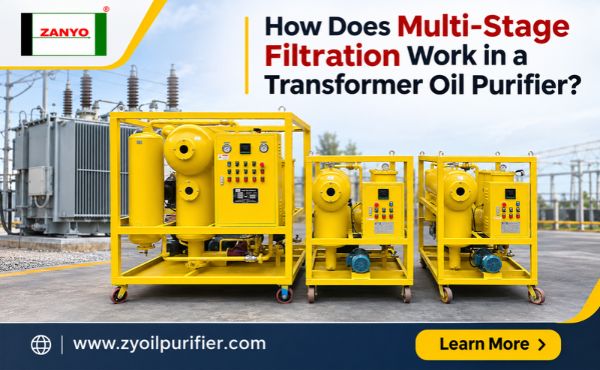
Multi-stage filtration combines three working principles inside one machine: heating, vacuum dehydration, and high-precision filters. Oil enters the transformer oil purifier and passes through each treatment zone in turn. Heat lowers the viscosity of the oil and releases bound moisture. The vacuum chamber then boils that moisture away under low pressure. Precision filter elements catch the solids that remain. This arrangement lets one unit circulate, dehydrate, degas, and purify transformer oil in a single pass.
No fixed recipe fits every transformer. Stages can be customized to match the contaminant types found in a given unit. A system facing heavy particulate loading may need larger filter capacity. A unit with high moisture ingress may benefit from deeper multi-stage thermal vacuum dehydration. Both approaches are valid. The right configuration depends on oil test results and operating conditions, not on a single universal design.
Why Single-Stage Filtration Falls Short
A single filter handles one job well. It traps particles down to its rated pore size and nothing more. Water passes straight through a mechanical element. Dissolved gases stay in solution. The oil may look clear and still fail a dielectric test.
Moisture and gas both weaken insulation strength. Particles bridge gaps and promote arcing. One stage cannot address all three problems at once. A staged design solves this by giving each contaminant its own removal mechanism. The filtration process becomes a sequence of targeted steps instead of one general pass.
How Oil Moves Through Each Stage
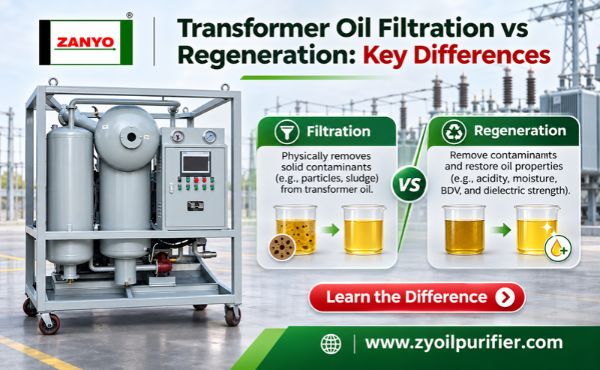
The flow direction follows a logical order. Oil first meets coarse filtration, which strips large debris and protects downstream elements. Fine filtration follows and captures smaller particulates. Next comes the vacuum section for dehydration and degassing. Polishing filtration sits at the end and catches trace remnants.
Each stage prepares the oil for the next one. Cleaner oil reaches the vacuum chamber, so heat transfers more evenly. Dry oil reaches the polishing element, so the element lasts longer. This order is the backbone of any transformer oil filtration system. A well-planned vacuum transformer oil filtration system follows the same path, whether the goal is routine maintenance or recovery of heavily aged oil.
Coarse and Fine Particle Removal in Transformer Oil Filtration
Solid particles enter transformer oil from many directions. Winding insulation sheds fibers over time. Metal wear releases fine dust. Airborne grit enters through seals and breathers. Each particle type carries a different size range. Particle removal therefore needs more than one filter grade. Coarse and fine stages split the workload, and each stage protects the one behind it.
Coarse Filtration for Large Particles
The coarse stage is the first line of defense in the process of transformer oil filtration. Oil leaves the transformer and meets a filter element with relatively open passages. This element traps large debris: insulation fibers, sludge clumps, and metal flakes. The purpose is protection as much as cleaning. Large debris can block narrow passages and damage pump components downstream. A coarse element holds that debris without choking the flow.
Pore size is the key term here. Pore size describes the width of the openings in the filter material. A coarse element has wide openings, so oil moves through quickly and pressure stays low. Filter media is the material itself, the woven mesh or fibrous sheet that does the catching. Media with wide openings suits the first stage. Media with tight openings suits later stages.
Fine Filtration for Smaller Particles
The fine stage follows the coarse stage and captures smaller particulates. Its pore openings are much narrower. Particles that slipped through the first element now meet a tighter barrier. This stage removes the fine grit and colloidal matter that cloud the oil and settle on insulation surfaces.
Compact multi-stage systems accept high-capacity 11-inch O.D. filter elements. These elements pack a large surface area into a small housing. The result is effective removal of particulates and water to very low levels. A compact skid still delivers serious capacity, so space constraints do not force a compromise on cleanliness.
The two particle stages work as a pair inside any transformer oil filtration system. Coarse filtration removes the bulk load. Fine filtration finishes the job. This division of labor extends element life. A fine element that faces only pre-cleaned oil lasts far longer than one that absorbs the full debris load alone.
Dehydration and Degassing in Transformer Oil Filtration System
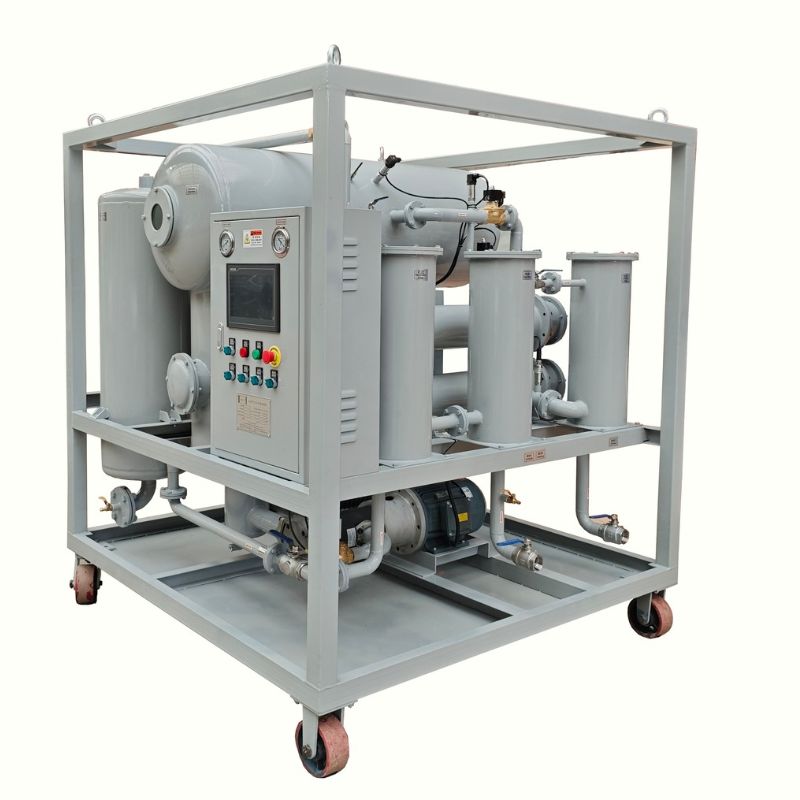
Water and dissolved gases hide inside transformer oil without any visible sign. A clear oil sample can still carry enough moisture to weaken insulation. The vacuum section of a نظام ترشيح زيت محول فراغي مزدوج المراحل exists to remove both contaminants. This section sits between particle removal and polishing. It handles the contaminants that filters cannot touch.
Removing Water with Heat and Vacuum
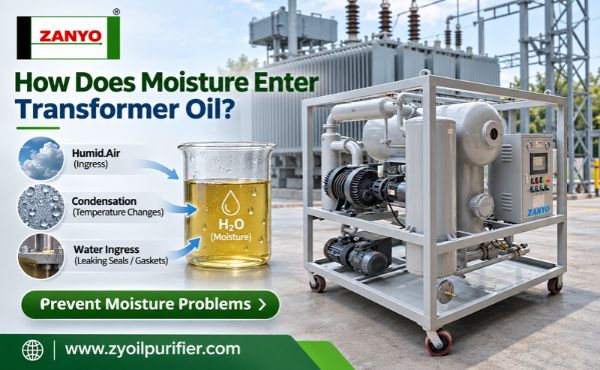
Heat and vacuum work as a team. The heater raises oil temperature and lowers its viscosity. Warm oil releases bound moisture more readily than cold oil. The oil then enters a chamber held under low pressure. Water boils at a much lower temperature under vacuum than at normal atmospheric pressure. Moisture leaves the oil as vapor and gets drawn out of the chamber.
High-vacuum degassing and dehydration restores dielectric properties. Dry insulation oil resists electrical stress far better than wet oil. Water molecules polarize under an electric field and create conductive paths. Remove the water, and the oil regains its insulating margin.
A double-stage vacuum transformer oil filtration system improves on this idea with two vacuum chambers in series. The first-stage vacuum dehydration and degassing strips the bulk of the moisture. The second-stage vacuum purification then works on oil that is already partly dry. Each chamber removes moisture and gases more effectively than a single-stage unit can. The result is deeper dehydration. This is the core of the double-stage vacuum working principle: split the duty, and each stage performs its share better.
Extracting Dissolved Gases
Dissolved gases behave differently from free water. They sit in solution within the oil, and they do not settle out on their own. Common gases include air, nitrogen, and breakdown products from aging insulation. Each one lowers the gas absorption strength of the oil. A high gas content also signals an active fault inside the transformer.
Degassing removes these dissolved gases through the same vacuum principle. Low pressure above the oil surface pulls gas molecules out of solution. The gas leaves with the water vapor and exits the chamber. In a two-stage vacuum transformer oil purification system, the second chamber repeats this extraction at deeper vacuum. Residual gases that survived the first pass get a second chance to escape.
The double-stage vacuum filtration process therefore treats moisture and gas removal as linked tasks. Both rely on vacuum, and both benefit from a second pass. Oil leaving the vacuum section holds far less water and gas than oil entering it. That improvement carries straight into the final filtration step.
The double-stage vacuum filtration design suits units with high moisture ingress or strict gas limits. A single-stage vacuum unit still serves many routine maintenance jobs well. Matching the configuration to the oil test results remains the practical rule.
For any double-stage vacuum transformer oil filtration job, the vacuum section does the work that no filter element can. Moisture and gas removal protects the insulation system, and the transformer oil purification system as a whole depends on this stage to restore dielectric strength.
Polishing Filtration for Trace Contaminants
Catching What Earlier Stages Missed
Polishing filtration is the last treatment step in the sequence. Oil arrives at this stage already free of large debris, most fine particles, and the bulk of its water and dissolved gases. What remains is a small load of trace contaminants. These include fine colloidal matter, residual moisture droplets, and tiny particles shed by upstream elements. The polishing element uses the tightest filter media in the train. Its narrow pore size catches what the coarse and fine stages let pass.
This final stage supports overall transformer oil purification. It does not replace the earlier stages. A polishing element that faced raw oil would load up fast and lose effectiveness. Its job depends on clean oil arriving from the fine stage and dry oil arriving from the vacuum section. Each earlier step makes the last one possible.
The same logic applies to the whole transformer oil filtration train. Polishing adds a margin of cleanliness, and that margin matters for a transformer under electrical stress. Trace particles can settle on insulation surfaces and slowly erode dielectric margin. Removing them keeps the oil closer to its target cleanliness level.
Maintenance teams should treat the polishing element as a consumable with a defined service interval. Track pressure differential across the housing and replace the element on schedule. A loaded polishing element restricts flow and adds no cleaning value. Fresh media keeps the final stage doing its job, and the full multi-stage filtration sequence then delivers oil that meets specification. Polishing is a small step in cost and a large step in confidence for any transformer oil purification program.
Reliability and Longevity Benefits of Transformer Oil Purification
The combined stages deliver high oil purity. Coarse and fine elements strip solids. The vacuum section removes water and gas. Polishing catches the traces. Clean, dry oil protects transformer reliability in a direct way. Insulation holds its strength. Windings stay free of conductive debris. The unit runs cooler and quieter.
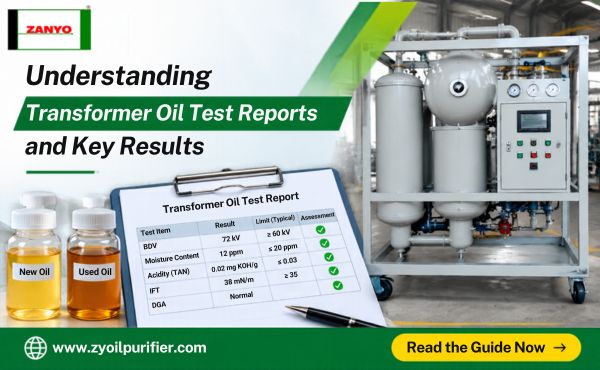
Multi-stage filtration and dehydration is a key step in the overall process of transformer oil filtration. It follows initial inspection, oil sampling, and equipment setup. Those early steps define the contaminant load. The purifier then treats the oil to match that load. This sequence keeps the work grounded in test data rather than guesswork.
Restored Dielectric Strength
Water and particles both erode dielectric strength. A double-stage vacuum transformer oil filtration system removes both in one pass. Moisture leaves under vacuum. Solids leave in the filter elements. The oil regains its insulating margin. A transformer oil purifier with the right stage configuration can purify transformer oil to a high cleanliness level. That level supports safe operation under electrical stress.
Single-stage units still fit many routine jobs. A small transformer with light moisture may need only basic treatment. Matching the configuration to the oil test results remains the practical rule. Each option has a place in a maintenance program.
عمر خدمة أطول وصيانة أقل
Clean oil slows insulation aging. Dry oil resists breakdown. Fewer contaminants mean fewer faults and fewer unplanned outages. The transformer oil purification system pays back through uptime. Maintenance intervals stretch. Filter changes follow a predictable schedule.
A vacuum transformer oil filtration system also supports long-term planning. Teams can track oil condition over time. Trends guide when to run the next treatment. This habit extends service life and lowers maintenance cost. The double-stage vacuum filtration design suits strict gas limits. Simpler designs suit routine upkeep. Either way, consistent transformer oil purification protects the asset. A well-maintained transformer oil filtration system keeps the whole fleet reliable.
خاتمة
Each stage of the sequence prepares the oil for the next. Coarse and fine filtration strip solids. Vacuum dehydration and degassing remove water and dissolved gases. Polishing filtration catches the traces. Together they lift the oil to high purity.
That purity protects the transformer. Clean, dry oil holds its dielectric strength, so the unit runs reliably. Fewer faults mean fewer outages, and steady oil condition extends service life.
For maintenance teams, the practical rule is simple. Match the stage configuration of the transformer oil purifier to the oil test results. Track pressure differential and replace elements on schedule. The transformer oil purification system keeps delivering. Consistent transformer oil purification protects any transformer fleet.
الأسئلة الشائعة
What does multi-stage filtration remove from transformer oil?
Each stage targets a different contaminant. Coarse and fine elements capture solid particles. The vacuum section removes water and dissolved gases. Polishing catches trace remnants. Together these steps support effective transformer oil purification and restore insulating quality.
Why use a double-stage vacuum transformer oil filtration system instead of a single chamber?
Two chambers in series remove moisture and gases more deeply. The first pass strips the bulk load. The second pass works on partly dry oil at deeper vacuum. This design suits units with high moisture ingress or strict gas limits. Routine jobs may still fit a single-stage unit.
How does vacuum dehydration fit into the process of transformer oil filtration?
Heat lowers oil viscosity and releases bound moisture. Low pressure then boils the water away as vapor. This step follows particle removal and precedes polishing. Vacuum dehydration is central to transformer oil purification because filters alone cannot remove water.
When should filter elements be replaced?
Track pressure differential across each housing. Replace an element before loading restricts flow. A loaded polishing element adds no cleaning value. Scheduled changes keep the transformer oil filtration system at rated capacity and sustain transformer oil purification performance over time.
Can one purifier configuration serve every transformer?
No single design fits all units. Stage configuration should match oil test results and operating conditions. A double-stage vacuum transformer oil filtration setup suits strict gas limits. Simpler designs serve routine upkeep. Matching the configuration to the oil condition remains the practical rule for any transformer oil purification system.